

Your family has found its seats, your name is coming up, and the graduation gown still feels unfamiliar on your shoulders. You want something that honors your HBCU, your family, and the work it took to reach this day, but you also need to know what your school permits and what fits your budget.
An HBCU graduation stole can carry several messages at once. Its design may express cultural heritage, institutional pride, academic achievement, or a connection to a student organization. Choosing one is both a personal decision and a practical purchase, so it helps to understand the tradition, check campus rules, and plan the details before ordering.
What an HBCU Graduation Stole Actually Represents
As you cross the stage, your stole is visible over the gown, but its meaning reaches beyond the photograph. A Kente-inspired pattern can connect you to African and African American cultural traditions. School colors, a name, or an approved emblem can show where you studied, while a first-generation, Greek-letter, veteran, nursing, or other identity symbol may recognize a community that helped shape your college experience.
That combination is why the stole is more than a decorative accessory. It works as a regalia overlay, a visible layer worn with formal academic clothing, and as a personal statement. One graduate might choose Kente to honor African-diasporic heritage; another might add institutional colors or organization letters to recognize a campus community. The meaning depends on the wearer and the design, not on a single universal rule.
A personal symbol in a shared ceremony
HBCUs represent a substantial higher-education community. In the 2021–22 academic year, historically Black colleges and universities conferred approximately 48,800 degrees, and Black students received 74% of them, according to NCES data on degrees awarded by HBCUs. A stole can identify a graduate's institution, degree pathway, cultural heritage, or organization within that wider story of achievement.
The moment also belongs to the people who supported you. If family and friends can't all attend in person, sharing ceremony images can help them feel included. An EventUploader graduation photo collection can give guests a way to contribute photos from different seats and perspectives, keeping the graduate's regalia and the people around them part of the same record.
A stole doesn't have to communicate every part of your identity at once. Start with what matters most to you, then consider whether your school allows the design and whether its symbols will remain clear alongside your gown, hood, and cords. Those choices make the stole feel intentional, rather than like one more item added at the last minute.
The History Behind HBCU Stoles and the Donning of the Kente
The modern Kente graduation-stole tradition has a documented starting point, rather than one fixed origin in an ancient academic ceremony. On May 15, 1993, West Chester University of Pennsylvania held a Kente Commencement Ceremony organized by faculty members Franklin Simpson, Jerome Huston, Christian Awuyah, and C. James Trotman. The ceremony recognized the educational obstacles overcome by African American students, and thirty graduates attended its inaugural event. It helped establish the “Donning of the Kente” as a recognizable graduation ritual.
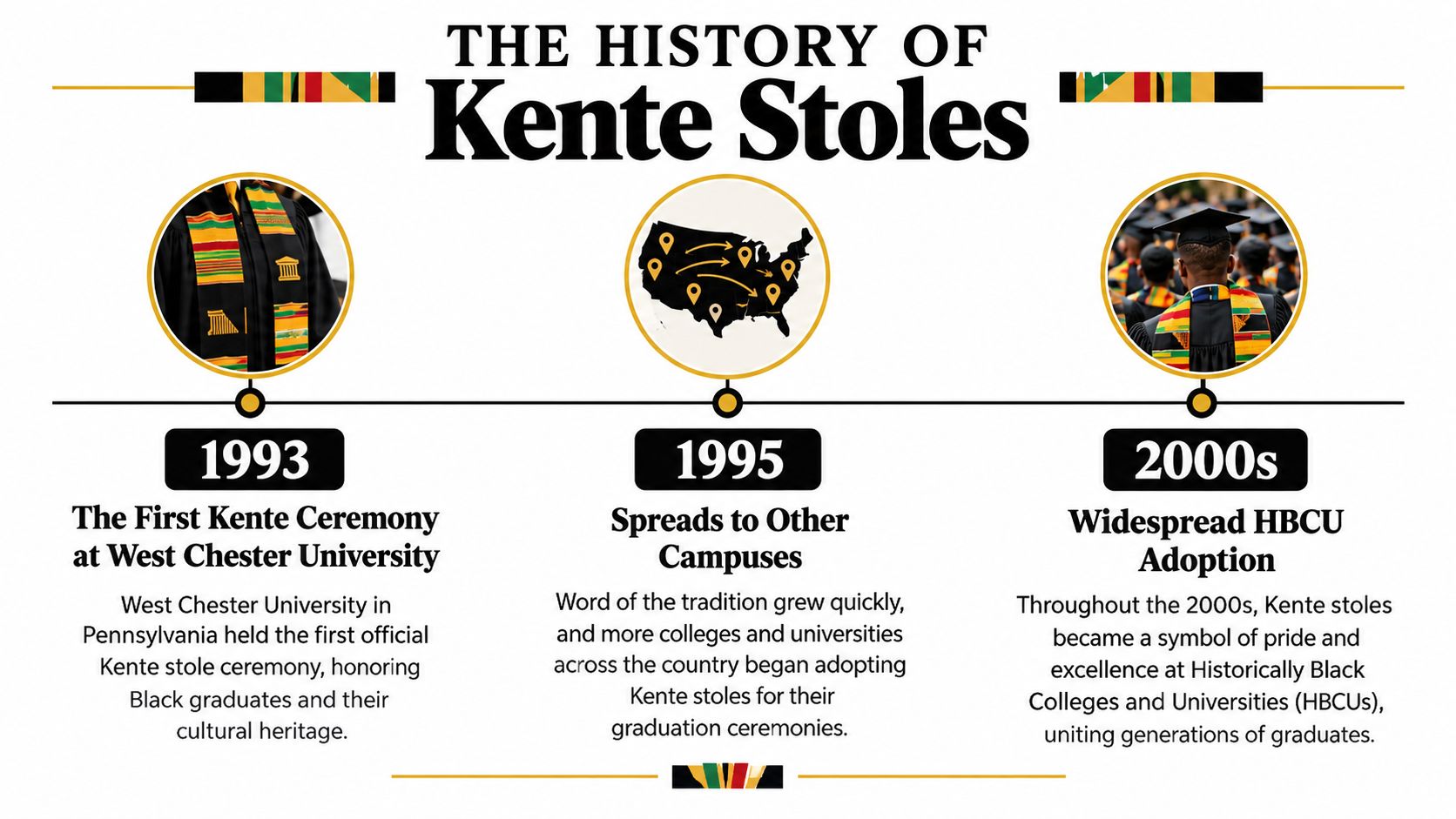
From a ceremony to a wider tradition
Kente is a handwoven Ghanaian textile associated particularly with Akan and Ashanti cultural traditions. In commencement settings, a stole made with Kente or Kente-inspired patterns is worn over the gown as a visible marker of heritage, persistence, community, and academic accomplishment.
The 1993 ceremony took place at West Chester University, not an HBCU. Its format nevertheless influenced Black student organizations and institutions, including HBCUs, over the following decades. That distinction matters: the ceremony is a documented modern milestone, while the cultural textile itself has a much longer history.
HBCU-themed designs often bring these threads together. A school name, mascot, seal, or institutional colors can identify a specific college, while the Kente-inspired pattern connects the graduate to a wider African-diasporic tradition. The result isn't merely a school accessory or a cultural symbol. It can be both.
For readers who want to explore the textile's relationship to commencement regalia, this guide to what a Kente stole is offers a related explanation. The historical point is useful when choosing a design: respect the meaning of the cloth, and avoid describing a contemporary graduation ritual as an unchanged ancient academic custom.
Reading the Color Palette of an HBCU Stole
Color is part of the message, not just a way to match a gown. Kente stoles often use a Pan-African palette of black, red, green, and yellow or gold. Common interpretations associate black with people of African descent, red with shared kinship and struggle, green with African fertility and abundance, and yellow with wealth. These meanings are widely used, but they aren't a universal code for every pattern or maker.
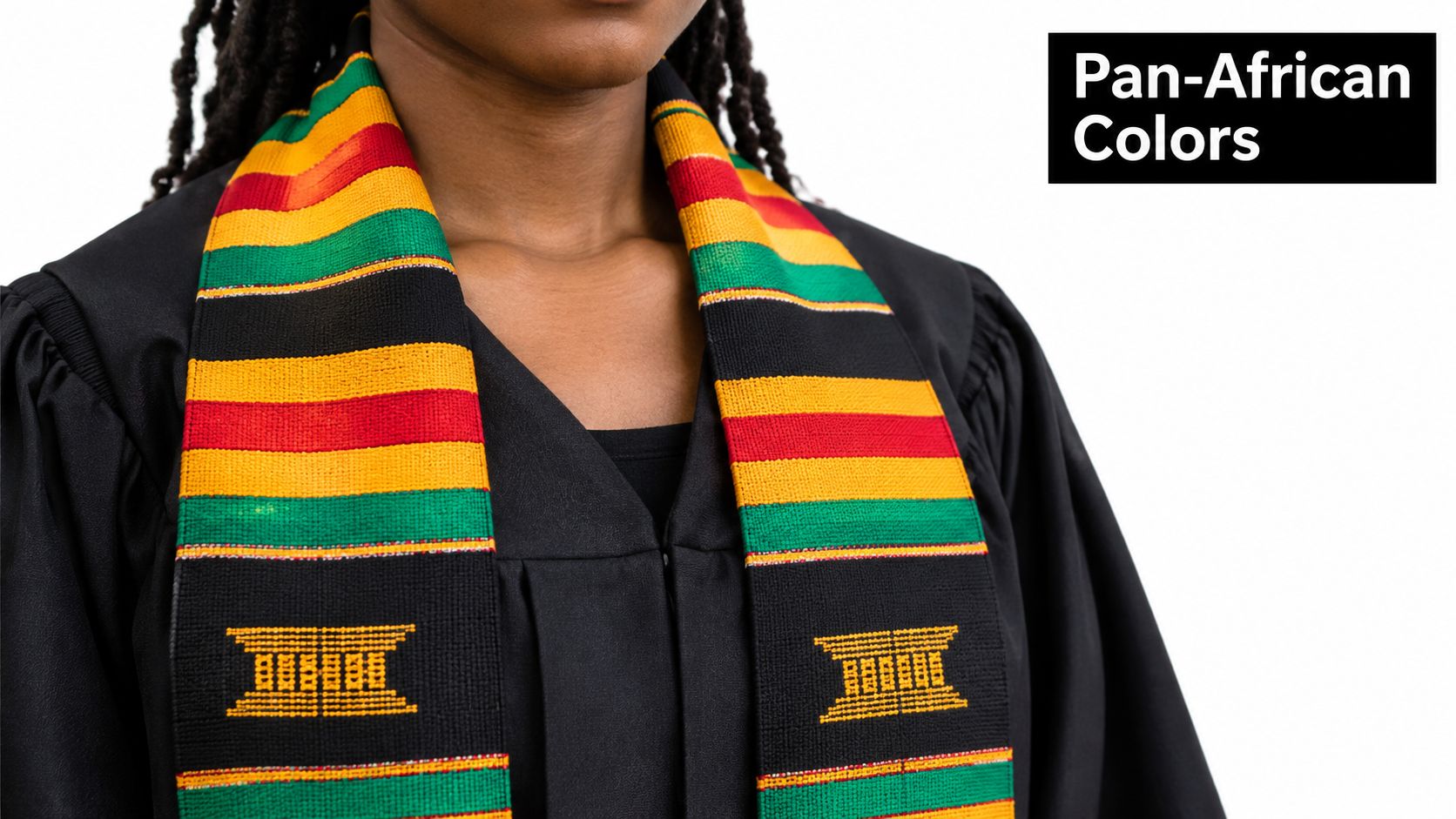
Three layers of color to consider
It helps to distinguish the different signals a stole can carry:
- Cultural palette: Kente-inspired black, red, green, and yellow or gold can communicate a broad African-diasporic connection.
- Institutional colors: A college's official colors connect the stole to a specific HBCU. Check the school's commencement or brand guidance rather than relying on a shade that looks close on a screen.
- Organization colors: Greek-letter groups, honor societies, and cultural organizations may use their own colors or insignia. Confirm that your organization's design is authorized and that your school permits it.
A single stole may combine these signals, but adding colors without a plan can blur the message. For example, a Kente-inspired base with a school name can make both heritage and institutional affiliation legible. A second organization's colors may add another layer, but only if the design remains clear and your ceremony allows it.
Make the design readable in person and in photos
Think about viewing distance. Dense multicolor motifs and small lettering may be hard to distinguish in auditorium lighting or graduation photographs. High-contrast embroidery, balanced placement, and a restrained border can help names or initials stand out against the patterned fabric.
Before ordering, verify official color references and logo rules with your school or organization. If you're choosing a custom stole, review the final proof at its actual size, not only on a small screen. A design that reads clearly when worn helps your stole represent its intended message without competing with the rest of your regalia.
Common Stole Styles and Materials You Will See at Commencement
Graduation stoles vary in fabric, finish, and construction. A handwoven Kente textile offers a direct connection to the cloth's cultural tradition; a jacquard version uses a woven pattern that may be more consistent across a group order. Satin reflects light, while a lightweight sash can be easier to wear under formal regalia.
The right material depends on how you'll use the stole. Consider whether it needs to lie smoothly beneath a doctoral hood, whether you'll wear it with cords, and whether you want to preserve it as a keepsake or lend it to another graduate later. There isn't one best option for every ceremony.
Compare the common choices
| Stole Style | Typical Material | Best For | Care Level |
|---|---|---|---|
| Traditional Kente | Handwoven cloth or jacquard fabric | Graduates prioritizing cultural pattern and heritage | Follow maker's care instructions; handle delicate woven cloth gently |
| Satin overlay | Smooth satin or satin-like fabric | A lightweight, polished look over a gown | Protect from snags and use gentle care |
| Ceremonial sash | Lightweight fabric | A simple layer with minimal bulk | Usually straightforward, but check the fabric label |
| Custom embroidered | Satin, twill, or another fabric with embroidery | Names, organization symbols, school details, or personal text | Store flat or rolled to protect stitching |
A custom embroidered stole can combine lettering or symbols with a base fabric. Ask how the front and back are finished, where text will sit, and whether embroidery adds stiffness or bulk. For a group, consistent fabric and placement can make a class photograph look cohesive without requiring each graduate to choose an identical personal message.
Fit the stole to the rest of your regalia
The stole should hang evenly and remain visible without interfering with the gown, hood, tam, or other prescribed academic clothing. Dense patterns may need larger, higher-contrast lettering; a plain satin surface may give a small emblem more room to stand out. If you're considering several accessories, try them together before ceremony day. A quick fitting can reveal whether a stole twists, bunches beneath a hood, or hides an important symbol.
How to Choose the Right Stole for Your Ceremony
Choose your stole in a clear order: confirm the rules, decide what you want it to represent, check how it will fit with your regalia, then approve any customization. Starting with the design before checking campus requirements can lead to an accessory you can't wear on stage.

Work through the decision in order
- Confirm commencement policy. Check the university's instructions or contact the commencement office. Ask whether cultural stoles, custom text, logos, or organization symbols need approval.
- Choose the story you want to show. You might prioritize your HBCU, Greek-letter affiliation, first-generation status, veteran or military service, nursing, LGBTQ+ identity, or another community. You don't have to represent every part of your life on one stole.
- Match the base to your assigned regalia. Consider the gown and hood colors, the material's bulk, and whether the stole will remain visible. A broad design may need a simpler layout if cords or a hood will also be worn.
- Review personalization carefully. Check the spelling of names, organization letters, class year, major, and any approved emblem. Confirm placement on each side before production.
Plan how the layers will sit
Try on your gown and accessories together, then check that the stole hangs symmetrically. Make sure it doesn't cover honor cords, catch on accessibility equipment, or bunch under a doctoral hood. If you'll wear more than one stole, ask the school how to position them and whether all are permitted. Don't assume an unofficial school seal or a design found online is cleared for use.
Practical rule: A meaningful design still needs to work with your school's ceremony requirements and the regalia you've been assigned.
After the ceremony, the celebration continues beyond the stage. If you're planning a gathering, party rentals for graduation celebrations can help you consider event needs separately from your commencement attire.
For a fuller explanation of how stoles and cords differ and fit together, consult this guide to cords and stoles. The final check is simple: policy, symbolism, fit, and proof approval.
Ordering Timeline, Group Buys, and Saving Money Without Cutting Corners
A stole's listed price is only one part of the graduation budget. Regalia, customization, shipping, and optional cultural ceremonies can all add expenses, so decide what's essential before placing an order. Planning early gives you more room to compare choices and correct an error without rushing.
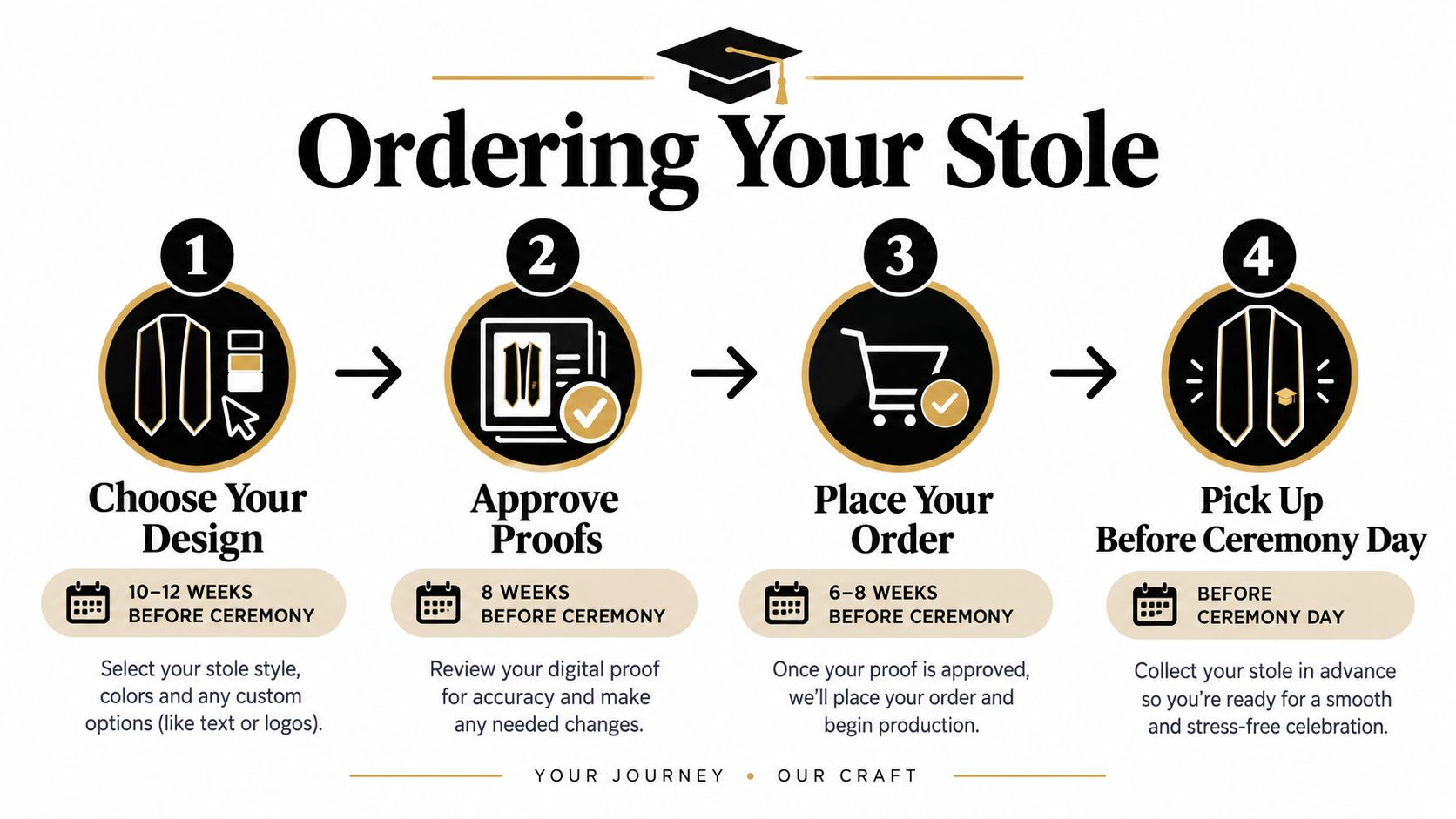
The following timeline is a practical planning guide, not a guarantee for every seller. Ask the maker for production and delivery estimates, especially for a custom or international order.
Plan backward from ceremony day
- Ten to twelve weeks before: Choose the design, confirm school rules, and collect the wording and artwork.
- Eight weeks before: Review the proof closely. Check spelling, colors, logo approval, and placement.
- Six to eight weeks before: Place the order for a domestic shipment when the maker's schedule supports it. For international shipping, keep a printed backup plan and ask about delivery risks.
- Before the ceremony: Check the package against the approved proof and contact the seller promptly if the item is incorrect.
Compare the full cost, not just the stole
A report on commencement expenses described one student paying $38 for a college stole, $43 for regalia, and $45 for an additional cultural ceremony, with the total exceeding $187 after taxes and fees. The same reporting listed a USC bachelor's rental package at $89.99, a base sash at $54.99, and customization at $20 per patch (report on commencement costs). These are examples from that reporting, not prices to expect at every school or retailer.
For a more manageable budget, compare group ordering, resale, reuse, and school lending options. A Greek chapter or graduating class can coordinate a shared design and ask suppliers whether a group order changes the per-piece price. Graduates can also ask student affairs or the commencement office about lending programs, then consider reselling or passing on reusable regalia after the ceremony.
Before purchasing, separate school-required items from optional identity pieces. That distinction helps you prioritize a stole without treating ceremony participation and personal expression as the same expense. This guide to where to buy graduation stoles can support your comparison of designs and purchasing options.
Caring for and Storing Your HBCU Stole After the Ceremony
After the ceremony, take the stole off gently and check the care label before cleaning or pressing it. Kente fabric, embroidery, and satin can respond differently to heat and moisture, so don't assume every stole can be treated like an everyday scarf.
If the fabric needs smoothing, steaming is often a gentler first option than direct ironing, but test cautiously and follow the maker's instructions. If the stole is damp, blot it with a clean cloth rather than wringing it, then lay it flat to dry away from direct sunlight. Avoid rubbing a stain deeper into the weave or stitching.
Handle common marks carefully
- Makeup: Lift loose residue gently and blot; don't scrub the fabric.
- Food: Remove solids carefully, then blot the spot with a clean cloth.
- Ink: Avoid adding water or rubbing, which may spread the mark. Ask a professional cleaner how to treat the material.
If the stole has intricate embroidery or a delicate woven pattern, professional cleaning may be safer than experimenting with a household product. Tell the cleaner what the fabric is, if you know, and point out any special stitching.
Store it as a keepsake
Make sure the stole is completely dry before putting it away. Fold it loosely or roll it around a clean, smooth support so the fabric and embroidery don't take a sharp crease. Acid-free tissue and an archival box can help protect a keepsake from dust and unnecessary handling; store it somewhere cool and dry, away from direct light.
Keep the care label and any cleaning instructions with the stole. When you bring it out for a family display or reunion, let it air briefly and check for creases before pressing. A little care preserves the fabric and the personal story attached to it.
Frequently Asked Questions About HBCU Graduation Stoles
Does every HBCU require a specific stole?
No single nationwide rule determines which stole every HBCU graduate may wear. Schools and organizations set local requirements, and some may provide an official stole while others allow approved cultural or personal designs. Check your commencement instructions and ask the office responsible for regalia before ordering.
Can I wear more than one stole without covering my honor cords?
Possibly, but layering rules vary. Try everything on with your gown and hood, then ask your commencement office where cords should sit and whether multiple stoles are allowed. Keep each item visible and make sure nothing interferes with accessibility equipment.
Are Kente stoles appropriate at non-HBCU graduations?
Kente stoles are also worn at some predominantly White institutions and other campuses, so the practice isn't limited to HBCUs. The stole's meaning comes from its cultural associations and the wearer's connection to them. Check the campus dress code before wearing one.
What should I do if a custom stole arrives with an error?
Compare it with the approved proof and photograph any spelling, color, or placement problem. Contact the seller promptly with the order details and images, then ask what correction or replacement options are available before altering the stole yourself.
Your next step can be small: check your school's regalia policy, choose the symbols that matter most, and save the approved design details before you order. That preparation leaves more room to enjoy the ceremony and the people who helped you reach it.
Graduation Attire offers customizable stoles, including HBCU, Kente, Greek-life, first-generation, LGBTQ+, veteran and military, and nursing designs, alongside caps, gowns, and other academic regalia. Browse Graduation Attire to compare options and plan a stole that reflects your story while fitting your ceremony requirements.