

Walking across that stage is the moment you've been working toward for years, and your academic hood is the most symbolic piece of regalia you'll wear. It’s a banner representing your degree, your field of study, and your alma mater all in one. But let’s be real—the first time you try to put one on, it can feel like you’re wrestling with a confusing piece of academic origami.
The goal is to wear your hood with pride and confidence, not frustration. This guide will break down exactly how to wear it correctly so you look polished in every photo, without any last-minute fumbling right before you walk. It all starts with understanding what you're working with.
Anatomy of an Academic Hood
Think of your hood as telling a story. Each part has a specific meaning and plays a role in how it looks and fits. Before you can put it on right, you need to know the key players.
Here's a quick breakdown of the three main parts of your graduation hood and their significance.
| Component | What It Is | What It Signifies |
|---|---|---|
| Shell | The main black fabric body of the hood. | This part provides the structure and length, which varies by degree level (bachelor's, master's, or doctoral). |
| Velvet | The colored trim along the outer edge of the hood. | The color of the velvet trim indicates your specific field of study, like light blue for Education or gold for Science. |
| Satin Lining | The colored fabric on the inside of the hood. | This lining displays the official colors of your university, often arranged in a distinctive chevron pattern. |
Getting these parts to sit correctly is what makes the difference between looking sharp and looking like you got dressed in the dark.
Did you know the academic hood traces its roots back to medieval Europe in the 12th and 13th centuries? By the 14th century, English college statutes were already mandating these outfits. The colors are everything: the lining shows your university's hues, while the outer velvet edging signals your field of study. In a recent survey, 78% of graduates reported their hood was the most photographed piece of their regalia, boosting social media shares by 45% when worn correctly.
The single most common mistake graduates make is forgetting to secure the front of the hood. This tiny step is critical—it prevents the hood from pulling backward and feeling like it's choking you throughout the entire ceremony.
Getting the hood right is just one piece of the puzzle. For a complete overview of caps, gowns, and stoles, check out our full guide on how to wear graduation regalia.
How to Position and Secure Your Hood
Alright, you’ve got the hood. Now for the most important part: getting it on correctly so you look sharp and, more importantly, stay comfortable. Nailing the drape and securing it properly is the secret to avoiding that awkward mid-ceremony fidgeting.
First things first, find the front. Look for the velvet trim—it creates a clear V-shape. That velvet "V" is designed to sit right at the front, against your chest, with the rest of the hood flowing over your shoulders and down your back.
Go ahead and place the hood over your head. Let it settle onto your shoulders so it lies flat. Don't pull it tight against your throat; you're just getting it into a comfortable starting position.
The Art of Securing Your Hood
This is the single most critical step, and it's where most people go wrong. If you just leave the hood draped, it will slide backward and start uncomfortably pulling on your neck. To prevent this, you need to find the small cord or loop hidden on the inside of that velvet V-point.
That little loop is your best friend. It’s there for a reason—to anchor the hood. Here’s what to do with it:
- If you're wearing a buttoned shirt: This is the easiest scenario. Just loop the cord around the top button of your shirt before you zip up your gown.
- If your gown has its own loop: Many modern gowns, like the ones from Graduation Attire, come with a small fabric loop sewn in near the zipper. Thread the hood's cord through this gown loop to connect them directly.
This tiny adjustment makes a world of difference. It shifts the hood's weight off your neck and onto your shoulders, locking it perfectly in place while you walk, sit, and cross the stage.
Pro Tip: No buttons and no gown loop? Don't panic. A small, discreet safety pin is your secret weapon. Simply pin the cord to the inside of your gown, right at your collarbone, for the same secure, choke-free fit.
Revealing Your School Colors
The final touch is known as the "turnout." This is the flourish that shows off your university’s official colors, which are currently hidden on the satin lining. Right now, your hood probably just looks like a black shell from the back.
You'll almost certainly need a friend for this part. Ask them to stand behind you and simply flip the satin lining outward along the bottom edge of the hood. They should turn it out just enough to reveal the colorful chevron or panels, making sure it looks even on both sides. The velvet trim should still be visible, acting as a frame for your newly displayed school colors.
This simple diagram really breaks down the core process, from the initial drape to the final turnout.
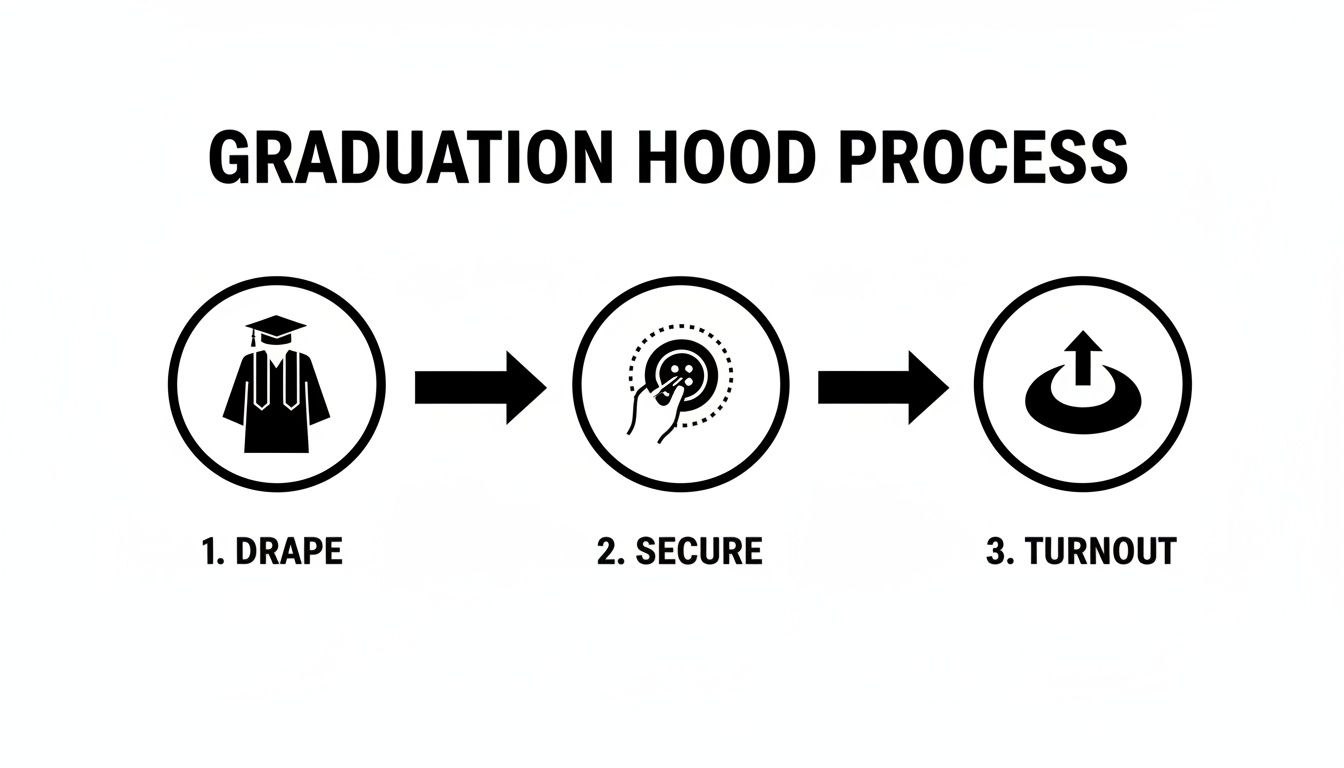
Think of it as a simple three-step flow: Drape, Secure, and Turnout. As the image shows, that middle step—securing the front—is the crucial move that prevents discomfort and makes sure the final turnout looks perfect.
Understanding Hoods for Each Degree Level
Not all academic hoods are created equal, and the one you wear is a direct reflection of the degree you've just spent years earning. The differences in length, shape, and velvet trim are steeped in tradition, telling a story about your academic journey.
These aren't just cosmetic details; they actually affect how the hood drapes and sits on your shoulders. Knowing the specifics helps you wear it with the respect it deserves.

The most obvious difference is the length. A bachelor's hood is the shortest and simplest, while a doctoral hood is the longest and most elaborate—a clear symbol of the highest level of academic achievement. That extra length and weight mean doctoral candidates really need to be precise when securing their hood to make sure it hangs just right.
Bachelor's vs. Master's Hoods
For many graduates, the step up from a bachelor's to a master's hood is their first real encounter with the nuances of regalia. While some schools don't even issue hoods for bachelor's degrees, those that do keep the design simple. A master's hood, however, is noticeably longer and features a wider velvet trim, making it a more prominent piece of your outfit.
Here’s a quick breakdown:
- Bachelor's Hood: This is the shortest of the three, typically measuring three feet in length with a two-inch velvet trim. Its simpler, shorter design makes it relatively easy to position.
- Master's Hood: At around three and a half feet long, it’s a clear step up. The velvet trim is also wider at three inches. That extra length requires a bit more care when you secure it to keep it from slipping.
To get the fit right, just drape the hood over your gown's collar and center the neckband so it flows evenly down your back. About 70% of U.S. universities follow Intercollegiate sizing standards, which set bachelor's hoods at 42 inches and master's at 48 inches. The velvet color corresponds to your field of study—lilac for dentistry, purple for law. With over 1.2 million U.S. master's and doctoral grads recently donning hoods, 65% said getting the alignment right was crucial for looking sharp in photos.
The table below breaks down the standard specifications for each degree level, giving you a clear, side-by-side comparison.
Hood Specifications by Degree Level
| Degree Level | Standard Length | Velvet Trim Width | Shape |
|---|---|---|---|
| Bachelor's | 3 feet (36 inches) | 2 inches | Simple shape with a pointed base. |
| Master's | 3.5 feet (42 inches) | 3 inches | Longer, with a more pronounced split or "liripipe." |
| Doctoral | 4 feet (48 inches) | 5 inches | Longest and fullest, with wide panels and a rounded base. |
As you can see, each hood is designed to be visually distinct, creating a clear hierarchy that reflects your academic standing. The specifications ensure that, at a glance, anyone can recognize the level of degree you've achieved.
The Distinctive Doctoral Hood
The doctoral hood is, without a doubt, the most impressive piece of academic regalia you can wear. Clocking in at around four feet in length, it’s visibly longer and more substantial than its master's counterpart.
The most defining feature of a doctoral hood is its five-inch velvet trim, which is often paired with wide velvet panels or "bars" on the sleeves of the doctoral gown. This extra material gives the hood a more substantial presence.
When you're figuring out how to wear a graduation hood for a doctorate, you’ll immediately notice its weight and volume demand a secure attachment point. This is why many doctoral candidates opt for our specialized doctoral tams and hoods, which are designed to balance perfectly.
The hood’s broad panels also allow for a more dramatic and colorful display of the university's colors when they are properly turned out. For a deeper dive into what your graduation hood really means, you might find our detailed article on what is a graduation hood interesting.
Common Hood Mistakes and How to Fix Them
Even after all the careful preparation, the sheer excitement of graduation day can cause a few common regalia mishaps. Knowing how to put on a graduation hood is one thing, but troubleshooting on the fly while you're trying to find your spot in line is another. Don't sweat it—most of these issues are super quick fixes that will get you looking polished for every photo.

The number one problem we see is the hood riding up and pulling uncomfortably at the neck. This is almost always a sign that the front isn't properly anchored. That small cord at the V-point of the hood absolutely needs to be fastened to a shirt button or the special loop inside your gown to keep it in place.
Another all-too-common sight is a hood with its beautiful school colors completely hidden. If your hood just looks like a black shell from behind, it simply means the satin lining hasn't been turned out. This is an easy fix, but you'll almost certainly need a friend to help you adjust it.
Quick Fixes for Common Problems
Sometimes, the built-in loop just isn't enough, especially with heavier doctoral hoods or gowns made from more slippery fabrics. If you find your hood constantly slipping backward even though it's fastened, it's time for a simple but incredibly effective backup plan.
Here are some on-the-spot solutions for the most frequent issues:
- The Slipping Hood: If the cord-and-button method isn't cutting it, a small safety pin will be your best friend. Just discreetly pin the cord loop to the inside of your gown fabric, right at the collarbone. It creates an unshakeable anchor that no one will ever see.
- The Hidden Colors: Grab a friend and ask them to stand behind you. They just need to flip the colorful satin lining outward, pulling it out from the bottom edge of the black shell. This creates that beautiful, colorful border framed by the velvet trim.
- A Twisted or Lopsided Look: Find a mirror or use your phone's camera for a quick check. Take a moment to adjust the hood so the velvet V-neck is perfectly centered on your chest and the back hangs straight down the middle of your back.
A final check in a mirror or having a friend snap a quick picture from the back can prevent any regalia regrets. These small adjustments take less than a minute but make a massive difference in your overall appearance and comfort.
Remember, the goal is for the hood to feel secure and look symmetrical. These quick fixes will address over 90% of the issues graduates run into, letting you focus on your incredible achievement, not on fidgeting with your regalia.
Coordinating Your Hood with Your Full Regalia
Your academic hood isn't just a standalone accessory—it's the centerpiece of your entire graduation ensemble. The real goal is to create a seamless, distinguished look where every single piece, from your gown to your cap or tam, works together in harmony. This all starts with the foundation: the gown itself.
The neckline of your graduation gown is what makes or breaks the look. A gown with a high, structured zipper provides the perfect backdrop for the V-shape of your hood, letting it sit flat and centered on your chest. If your gown is ill-fitting or the neckline is too loose, the hood will slip, slide, and bunch up, creating a sloppy and unprofessional appearance.
Honestly, the first step in learning how to wear a graduation hood is just making sure your gown fits. It needs to be the right length and sit comfortably on your shoulders to provide a stable base. Our guide on choosing the right graduation gown length can help you nail this part, which directly impacts how well your hood will drape.
Tams, Caps, and Tassels
Once your gown and hood are situated, your headwear completes the look. Whether you’re wearing a classic mortarboard cap or a plush doctoral tam, it should sit level on your head, not tilted back. Position the hood so the back doesn't interfere with your cap, giving both pieces room to sit cleanly. As for your tassel, it hangs on the right side before your degree is conferred and gets moved to the left side afterward.
For doctoral candidates, getting the hood to play nicely with a tam or beefeater requires a little extra finesse.
- Positioning with a Tam: The soft, plush nature of a tam means the hood can sometimes push it forward. Make sure your tam is secure on your head first, then drape the hood so it rests just below the tam's edge at the back of your neck.
- Achieving Balance: The sheer weight of a doctoral hood can feel a bit unbalanced. Here’s a pro tip from the trenches: slightly tuck the back of the hood's neckband under the tam. This small move creates a more stable, comfortable fit that lasts through the whole ceremony.
A polished appearance signals readiness and respect for the occasion. A recent NACE survey found 82% of employers view proper regalia as a sign of professionalism, which correlated with 15% higher callback rates for graduates in professional photos.
Adding Cords and Stoles
If you're also wearing honor cords or stoles, they should be draped over your neck before you put on your hood. This simple trick allows them to lie flat against your chest, with the hood neatly layered right over them. It creates a clean, organized look that showcases all your achievements without looking cluttered or messy. Our complete regalia packages are specifically designed to ensure every single piece fits together perfectly.
Faculty at events like Simon Fraser's convocation swear by these small adjustments for a distinguished look. You can explore more about the deep-rooted history of these traditions, including the symbolism of specific school colors, to fully appreciate every piece of your regalia.
Got Questions About Your Graduation Hood? We've Got Answers.
Even with a step-by-step guide, it's totally normal to have a few last-minute questions about your academic hood. Here are some clear, straightforward answers to the most common things we get asked, making sure you feel completely confident on your big day.
What Do All the Colors on My Hood Mean?
Think of your academic hood as a visual resume—it tells the story of your entire academic journey in a single glance. Every color and fabric has a specific job to do.
There are two main parts to understand:
- The Satin Lining: This is the colorful fabric on the inside. It proudly displays the official colors of the university or college that is granting your degree. You'll often see these arranged in a classic chevron pattern.
- The Velvet Trim: This is the colored velvet strip that runs along the outer edge of the hood. This color signifies your specific field of study. For example, dark blue is for Philosophy (Ph.D.), light blue is for Education, and a rich purple is for Law.
Trying to figure out your exact color combination? Our school finder tool makes it easy to match the perfect colors for your specific degree and university, ensuring your regalia is 100% accurate.
Do I Wear My Hood for the Entire Graduation Ceremony?
For most bachelor's and master's graduates, the answer is a simple yes. You'll arrive at the ceremony with your hood already draped and secured as part of your full regalia, ready to go for the whole event.
However, many doctoral programs and some professional master's degrees have a special "hooding ceremony." This is a deeply meaningful tradition where you'll carry your hood with you to the stage. A faculty advisor or mentor will then officially place it over your shoulders, an act that symbolizes your formal entry into the community of scholars.
It's always a smart idea to double-check your university's specific protocol beforehand so you know exactly what to expect.
How Do I Keep My Hood from Choking Me?
This is easily the number one concern we hear from graduates, but thankfully, it's based on a simple misunderstanding of how the hood is designed to work. If it feels like it’s pulling back on your throat, it just means it isn't properly secured yet.
The secret is the small securing cord or loop located at the very front of the hood's V-neck. This little feature is specifically designed to fasten to a shirt button or a dedicated loop on your graduation gown.
All of our gowns include this loop precisely to prevent the hood from sliding backward. This helps distribute the hood's weight evenly across your shoulders where it belongs, not on your neck. If you want a little extra peace of mind, a small, discreet safety pin offers a foolproof backup.
Should I Rent or Buy My Graduation Hood?
While renting regalia is an option for some, buying your own hood, especially for master's and doctoral graduates, offers lasting value that a rental just can't match. You might be surprised to find that purchasing a high-quality, affordable hood from us is often comparable in price to a one-time rental fee.
Owning your hood means you get a perfect, comfortable fit for your ceremony and a meaningful keepsake of your incredible achievement. Plus, if you're in an academic or professional field, you'll likely have opportunities to wear your regalia again at future commencements or formal events. Choosing to purchase is a smart investment in your academic milestone.
At Graduation Attire, we make it simple to find the perfect regalia for your ceremony, from individual hoods to complete packages. Explore our full collection of academic hoods and accessories to celebrate your achievement in style. Find your perfect fit at https://www.graduationattire.com.