

Knowing how to wear your graduation regalia correctly is key to looking sharp and feeling confident on your big day. Let’s get the basics down first. The gown zips in the front, the cap sits flat on your head with the point facing forward, and your tassel starts on the right side before you move it to the left after your degree is officially conferred. If you're earning an advanced degree, the hood rests over your shoulders, showing off its colors down your back.
Your Quick Guide To Assembling Your Graduation Regalia
Graduation day is a fantastic whirlwind of excitement, photos, and formal proceedings. The very last thing you want to be stressing about is whether your cap is on straight or your hood is bunching up. Understanding how to properly wear each piece of your academic attire isn't just about looking the part—it’s about honoring the centuries-old traditions that make the ceremony so meaningful. This guide is your pre-ceremony cheat sheet, giving you a clear overview of the essentials before we dive into the specifics for different academic levels.
Having everything in its right place is a major confidence booster as you get ready to walk across that stage. From the fit of your gown to the final placement of your tassel, every detail contributes to a dignified and memorable look. Think of it as building your outfit layer by layer: the gown is your foundation, and each symbolic piece gets added on top. For institutions needing support with various academic materials, including graduation essentials, some companies offer specialized education services.
This visual flow shows the proper order for putting on your main regalia items.
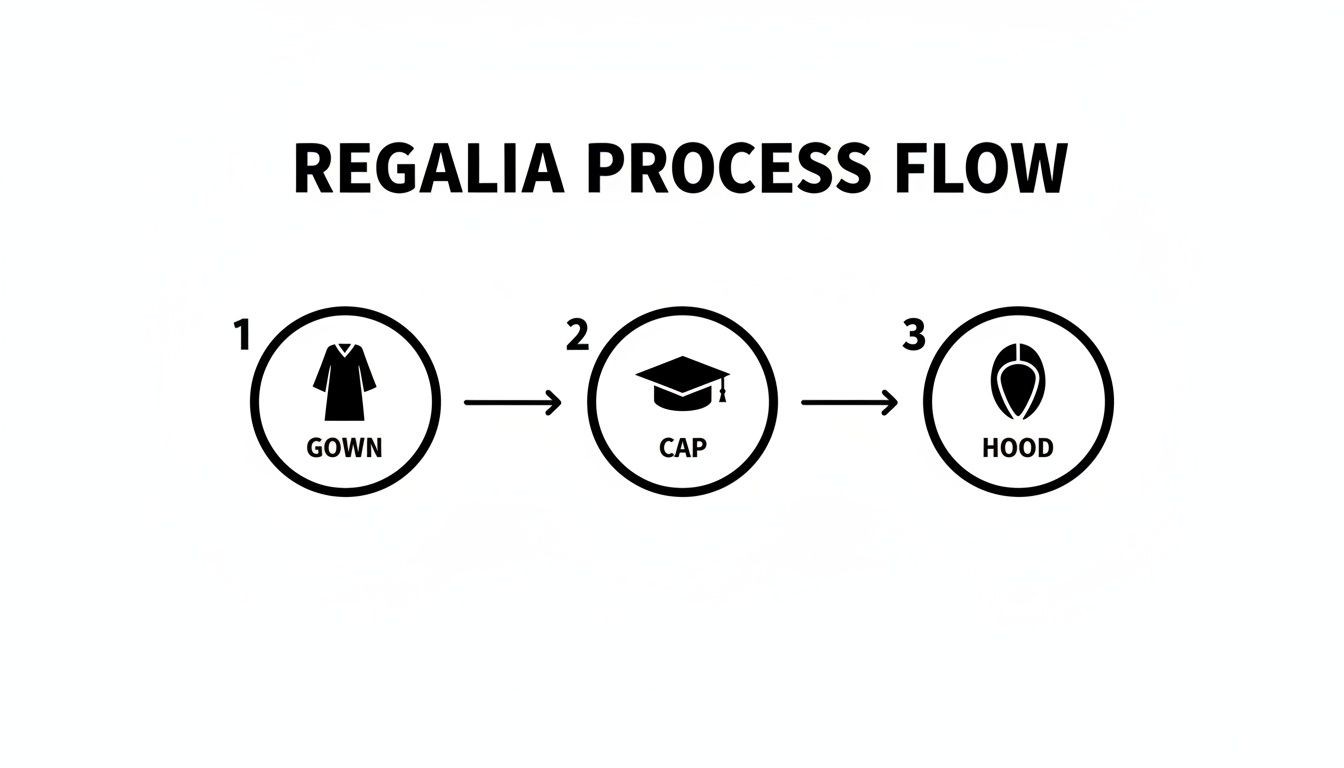
Following this simple sequence—gown first, then cap, and finally the hood for advanced degrees—is the best way to prevent tangles and make sure each piece lays exactly as it should.
Regalia Placement At a Glance
Here’s a quick-reference table summarizing where each piece of academic regalia goes, along with an essential tip for getting the placement just right. Nailing these basics is the key to a polished and picture-perfect look.
| Regalia Item | Where It Goes | Essential Tip |
|---|---|---|
| Gown | The main garment, worn over your clothes. | Zip it fully and ensure it hangs freely without bunching at the shoulders. |
| Cap/Tam | On your head, parallel to the ground. | The front point of the mortarboard should align with the center of your forehead. |
| Tassel | Hung from the button on top of the cap. | Start with the tassel on the right side before the ceremony begins. |
| Hood | Draped over your shoulders, hanging down your back. | Secure the front loop to a shirt button or pin to keep it from sliding backward. |
Getting these fundamental pieces in place correctly sets the stage for a smooth and memorable graduation experience, letting you focus on the moment you've worked so hard for.
Wearing Your Gown and Cap with Confidence
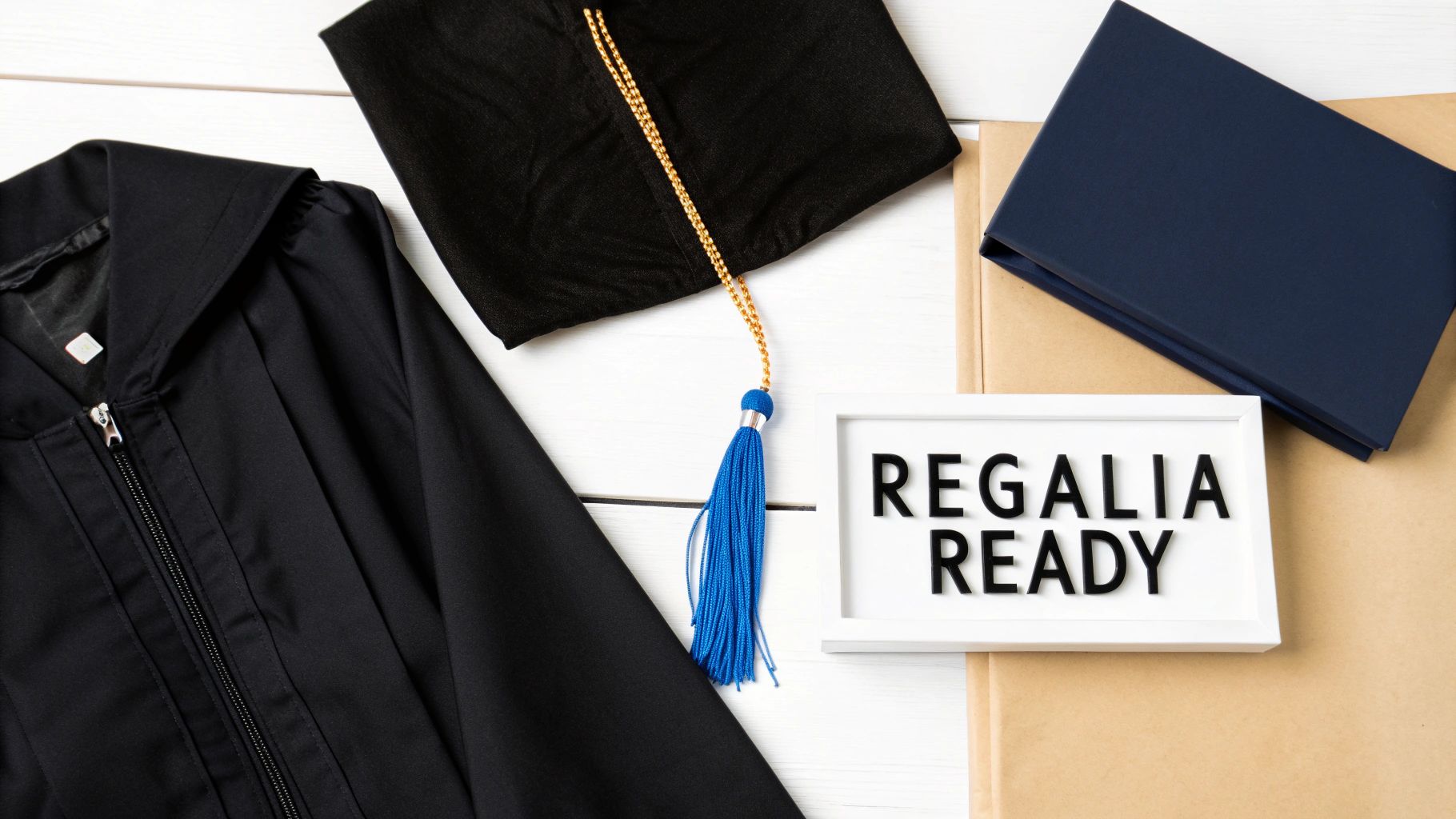
Let's start with the basics: the gown and cap. These two pieces are the foundation of your entire graduation look, and while they seem simple enough, the details really do matter. How you wear them changes depending on your degree level, so mastering these core pieces is the first step to looking sharp on your big day.
For anyone graduating from high school or earning a bachelor's degree, the gown is a fairly straightforward garment with elegant, pointed sleeves. The goal is a clean, classic look. Make sure the zipper is in the front and pulled all the way up, letting the fabric drape naturally.
Nailing the Gown Fit
The single most important detail is the length. A properly fitted gown should hit somewhere between your knee and ankle. If it's too short, it can look a bit awkward, but if it's too long, you’ve got a serious tripping hazard on your hands.
Check out our guide on the proper length of your graduation gown for detailed charts that will help you find that perfect fit based on your height. It makes all the difference for a polished silhouette as you walk across the stage.
Distinctions for Advanced Degrees
Once you get to the master’s and doctoral levels, the gowns get a lot more interesting. A master's gown is easy to spot by its unique oblong sleeves, which are closed at the bottom but have a slit for your arms to go through. It’s a design with historical roots—that closed part once doubled as a handy pocket.
Doctoral gowns are the most elaborate of all. They feature plush velvet panels running down the front and three matching velvet bars, called chevrons, on each of the full, bell-shaped sleeves. These elements are a clear sign that the wearer has reached the highest level of academic achievement.
Positioning Your Cap Correctly
Whether you're wearing a classic mortarboard or a soft velvet tam, getting the placement right is key for both comfort and looking the part. The mortarboard should sit flat on your head, parallel to the ground—not tilted back on your hair like a fedora.
The front point of the cap should be centered right on your forehead. If you have fine hair or are worried about a gust of wind during an outdoor ceremony, a couple of bobby pins will be your best friend. Just slide them through your hair and under the cap's edges to anchor it down.
A common mistake is wearing the cap tilted like a hat. Remember, it's designed to be a flat "board" on your head. A secure, level cap not only looks correct but also prevents it from flying off during the ceremony.
Believe it or not, the tradition of the flat-top 'mortarboard' goes all the way back to the 1200s, when it was designed to mimic a plasterer’s tool. And that celebratory cap toss we all know and love? It’s now a staple in over 75% of American ceremonies, a tradition that started in 1912 when U.S. Naval Academy graduates first threw their midshipmen hats into the air.
Mastering the Academic Hood and Tassel Turn

Let's talk about the two most symbolic—and often confusing—parts of your regalia: the academic hood and the tassel. Unlike the straightforward gown, the hood is a complex piece rich with tradition, representing your degree, field of study, and alma mater. Getting it to sit right is a common source of pre-ceremony stress, but it's easier than it looks.
Then there's the tassel turn. It’s that single, defining moment for so many graduates—a simple gesture that officially marks your transition from candidate to graduate. Let’s demystify these two crucial elements so you can handle them like a pro.
Draping Your Academic Hood Correctly
The key to wrangling an academic hood is understanding its basic design. It's meant to drape over your head and rest on your shoulders, hanging down your back. The velvet trim, which represents your specific field of study, should be visible from the front.
Look for a small loop or cord on the front part of the hood’s V-neck. This is your secret weapon. It’s designed to attach to a button on your shirt or dress, but a safety pin secured to your gown works just as well. This tiny step is critical—it keeps the hood from sliding backward and feeling like it's choking you all ceremony long.
Once the front is secure, the real magic happens in the back. You'll likely need a friend to help with this part. The goal is to turn the satin lining and velvet trim outward, revealing the vibrant colors of your university and your degree. This is what allows your full academic story to be displayed as you walk across the stage. For a more detailed walkthrough, check out our guide on how to wear the academic hood.
The hood's colors aren't random; they follow a standardized code. The tradition dates back to 12th-century Europe but was formalized in the U.S. in 1895 when top universities adopted the Intercollegiate Code of Academic Costume. This code standardized colors for fields of study, like golden yellow for science. Today, it influences the regalia for nearly 2 million students annually across over 4,000 U.S. colleges.
The Symbolic Tassel Turn
That little tassel on your cap is more than just decoration; its movement is a rite of passage. Before your degree is conferred, the tassel belongs on the right side of your mortarboard or tam. This placement signals your status as a candidate for graduation.
During the ceremony, there will be a specific moment—usually after all degrees have been awarded—when the university president or dean will instruct the graduating class to move their tassels. In one unified motion, you’ll reach up and shift your tassel from the right side over to the left side.
This simple act is packed with meaning. It signifies that you have officially earned your degree and completed your academic journey at the institution. It’s the final punctuation mark on years of hard work.
How to Properly Wear Cords, Stoles, and Medals

While your cap, gown, and hood are the traditional foundation of academic regalia, the accessories are what really tell your story. Honor cords, stoles, and medals are the pieces that personalize your look, turning your gown into a visual resume of your unique journey.
Each one represents a specific achievement, membership, or part of your identity. Learning how to wear them correctly ensures that every single honor gets the spotlight it deserves. The key is to create a balanced, dignified look where nothing gets lost in the shuffle, especially when you're wearing multiple items.
Positioning Honor Cords for Maximum Impact
Honor cords are the thin, decorative ropes with tassels on each end. They’re your badges of honor, signifying achievements like graduating cum laude or your membership in an honor society.
To get them right, just loop the cord over your head so the knot or center rests at the back of your neck. The two sides should hang down evenly on the front of your gown. If you've earned a few, you can pin them together at the nape of your neck to keep them from sliding around or looking messy as you walk.
And if you're curious about what all the different colors mean, check out our guide on graduation ropes and their color meanings. It breaks down what each strand represents.
How to Wear Graduation Stoles
Stoles (or sashes) are the wider strips of fabric worn over the shoulders to celebrate involvement in a program, a cultural group, or a specific organization. We see graduates celebrate their identity with everything from vibrant Kente and Serape stoles to Veteran and First-Generation stoles.
Here's how to wear a stole so it looks sharp:
- Drape it around the back of your neck so it lies flat against your gown and shoulders.
- Make sure both sides hang at an equal length down your front.
- The stole should be worn on top of your gown, but underneath your academic hood. This layering is the secret to a polished look.
When you're wearing both a stole and a hood, the stole always goes on first, lying directly on your gown. Then, the hood is draped over it. This little trick prevents the stole from bunching up and ensures both pieces are displayed perfectly.
Placing Medals with Care
Graduation medals are awarded for specific, high-level achievements and hang from a ribbon around your neck. You want it to be seen without clashing with your other regalia.
Position the medal so it hangs flat against your chest, somewhere between your chin and the top of your stoles or cords. If you have more than one medal, your school will probably have guidelines on which one gets top billing.
Once the ceremony is over, you might wonder what to do with these keepsakes. For some great inspiration, check out these creative ideas for displaying medals and give your achievements a place of honor.
Don’t Let These Common Regalia Mistakes Ruin Your Big Day
The moment is finally here, and a wardrobe malfunction is the absolute last thing you need. After years of grinding, you deserve to walk across that stage feeling nothing but pride, not fussing with a rogue tassel or a wrinkled gown. Knowing how to wear your regalia is one thing, but sidestepping the common pitfalls is what makes for a smooth, stress-free ceremony.
From a creased gown to a cap that just won't stay put, these little issues can quickly become huge distractions. The good news? With just a bit of prep, you can avoid them entirely. Think of this as your field guide to troubleshooting your gear before it becomes a problem.
The Wrinkled Gown Predicament
Easily the most common mistake is waiting until the morning of graduation to tear open the package. When you pull your gown out of that tight plastic, it’s going to be a mess of stubborn creases from being folded. Whatever you do, resist the urge to grab an iron.
Most graduation gowns are made from polyester or similar fabrics that will melt under direct heat. Your best friend here is steam.
- Hang It Up, ASAP: The second your regalia arrives, take the gown out and get it on a hanger. Gravity is a great first step, and it will let many of the lighter wrinkles fall out naturally over a day or two.
- Use a Steamer: A handheld garment steamer is the safest and fastest way to get a crisp, smooth finish. Work in sections, holding the steamer a few inches from the fabric.
- The Bathroom Trick: No steamer? No problem. Just hang your gown in the bathroom while you take a long, hot shower. The steam will help relax the fabric and soften most of the wrinkles.
Securing a Slippery Cap and Hood
Another classic graduation day struggle is the wandering mortarboard or the sliding hood. An outdoor ceremony with the slightest breeze can turn your cap into a frisbee if it isn't anchored down. And a hood that keeps creeping up your neck isn't just uncomfortable—it looks sloppy.
A few simple tools are your secret weapons here. Make sure you have bobby pins and safety pins on hand; they are absolute lifesavers for keeping everything locked in place.
Don't spend the entire ceremony fighting a hood that’s trying to choke you. There’s a small loop on the front of the hood for a reason—use it to secure it to a shirt button. If you don't have a button, a small safety pin attached discreetly to your gown will do the trick. This tiny adjustment is the key to keeping it perfectly draped.
For your cap, slide two or four bobby pins through your hair and under the edges of the mortarboard. This will anchor it securely to your head, keeping it flat and centered just like it's supposed to be.
Your Pre-Ceremony Regalia Checklist
Before you head out the door, run through this quick final check. It’ll catch any last-minute errors and give you the peace of mind to focus on your moment.
- Gown Direction: Is the zipper in the front? It sounds obvious, but you’d be surprised how often gowns get put on backward in the morning rush.
- Cap Position: Is the mortarboard flat and parallel to the ground? The point in the front should be lined up with the center of your forehead.
- Tassel Placement: Is your tassel on the right side? It stays there until the ceremony directs you to move it to the left.
- Hood and Accessories: Is your hood draped correctly with the colors showing? Are your stoles, cords, and medals layered neatly and pinned down?
- Comfort Check: Finally, do a quick walk and a turn. Does anything feel too loose, too tight, or just plain weird? Make those final adjustments now so you can walk across that stage in total comfort.
Answering Your Toughest Graduation Regalia Questions
Even after you've got the basics down, a few nagging questions always seem to pop up as the big day gets closer. Don't worry, that's completely normal. Think of this as your go-to FAQ for handling those last-minute details that can make all the difference.
From getting the right fit to keeping your gown from looking like it was balled up in your closet, we've got you covered. Here are some straightforward answers to the most common questions we hear from graduates.
How Do I Choose the Right Size Graduation Gown?
This is way simpler than it sounds. Gown sizing is almost always based on one thing: your height, measured from the top of your head to the floor. For example, if you stand 5'4" tall, you’ll likely need a size 51 gown. At Graduation Attire, all of our product pages have detailed sizing charts to help you find that perfect, polished length.
We also offer plus-size fits, which give you a little more room through the shoulders and chest for extra comfort. Here’s a little insider tip: measure your height while wearing the shoes you plan to put on for the ceremony. It’s a small step that ensures the most accurate fit.
What Is the Best Thing to Wear Under My Gown?
Comfort is king. Commencement ceremonies can drag on for hours, so what you wear underneath really matters. We always recommend lightweight, business-casual attire. Think dress shirts, simple dresses, slacks, or a nice blouse. Those gowns are notorious for trapping heat, so definitely steer clear of anything heavy or bulky.
Darker, neutral-colored clothing is usually your safest bet, as it won't show through the gown's fabric. But honestly, the most important decision you'll make is your shoes. You are going to be standing and walking a lot more than you think. Pick footwear you know you can last in for hours without a second thought.
One of the most overlooked aspects of graduation day attire is footwear. The excitement can make you forget that you'll be on your feet for hours, often walking long distances from parking lots or across campus. Prioritizing comfort in your shoe choice is a decision you will not regret.
Is It Okay to Decorate My Graduation Cap?
Decorating your cap is an awesome way to show off your personality and give a shout-out to the people who supported you. But whether it's actually allowed is entirely up to your school. Many high schools and universities love this tradition, while others have a strict no-alterations policy.
Before you break out the glue gun, always, always check your institution's official commencement guidelines. If you get the green light, just make sure everything is stuck on securely and won’t block the view of the person sitting behind you. It’s a fantastic chance to thank your family, represent your major, or share a quote that got you through it all.
How Should I Care for My Regalia Before the Ceremony?
To look your best, pull your regalia out of its packaging the moment you get it. The first thing you want to do is hang up the gown. This lets most of the packing wrinkles and creases fall out naturally.
For any stubborn wrinkles that stick around, a handheld steamer is your best friend. If you don't have one, hanging the gown in a steamy bathroom for about 20 minutes usually does the trick. Whatever you do, never iron the gown directly. The intense heat can easily melt or damage the fabric. Keep your cap on a flat surface and store your tassel, hood, and other accessories somewhere safe, like in one of the protective garment bags from Graduation Attire.
At Graduation Attire, we provide high-quality, affordable regalia to make your commencement day perfect. From custom stoles that celebrate your identity to perfectly fitted gowns for every degree, we have everything you need to honor your achievement. Find your complete graduation look at https://www.graduationattire.com.