

You're comparing graduation attire online, and one option keeps drawing your eye: a purple graduation cap and gown. Then the practical questions start. Does purple mean law? Is it your university's official color? Will the shade photograph well, and how do you choose the right size?
Purple regalia can communicate several different things, depending on the institution, degree, country, and ceremony. It may follow a formal academic color code, represent school identity, or provide a distinctive look for a high school or college celebration. The safest purchase begins by separating those meanings from the garment's fabric, fit, accessories, and delivery requirements.
Why Purple Graduation Regalia Stands Out
A parent may begin by searching for a standard black cap and gown, then pause after seeing a matte purple high school graduation cap and gown or a brighter shiny option. A college graduate might find a purple bachelor's set while looking for school-color apparel and wonder whether the shade has an official academic meaning. A doctoral candidate may be comparing purple velvet facings with a traditional black gown and need to know which details belong to the university's dress code.
Those questions are reasonable because purple sits between symbolism and style. Black regalia usually feels formal and broadly conventional, while navy can reflect a school or institutional palette. Purple has a stronger visual presence, especially in photographs, and it can look either dignified or vivid depending on the fabric finish, lighting, and surrounding colors.
What buyers usually need to confirm
Before ordering, identify which of these situations applies:
- School color choice: Your institution may require or recommend purple because it appears in the university's branding or ceremony design.
- Academic field code: A formal regalia system may use purple for a particular discipline, such as law or jurisprudence.
- Degree-level detail: Purple may appear on doctoral facings, hoods, tams, or other components rather than across the entire gown.
- Personal preference: A nontraditional ceremony or independent portrait session may allow purple because the graduate wants a distinctive appearance.
The same color can therefore carry different messages. A purple gown at a school with purple branding may express institutional pride without identifying the graduate's major. In another setting, purple velvet on a hood or facing may follow a discipline-specific convention.
Practical rule: Treat the ceremony instructions as the final authority, not a general internet color chart.
This guide helps you make the decision in the right order. First, verify the meaning your institution assigns to purple. Then compare polyester and velvet construction, check measurements, coordinate the hood and tassel, and decide whether personalization supports the ceremony rules. That process keeps an attractive purchase from becoming an expensive mismatch.
The Meaning Behind Purple Academic Dress
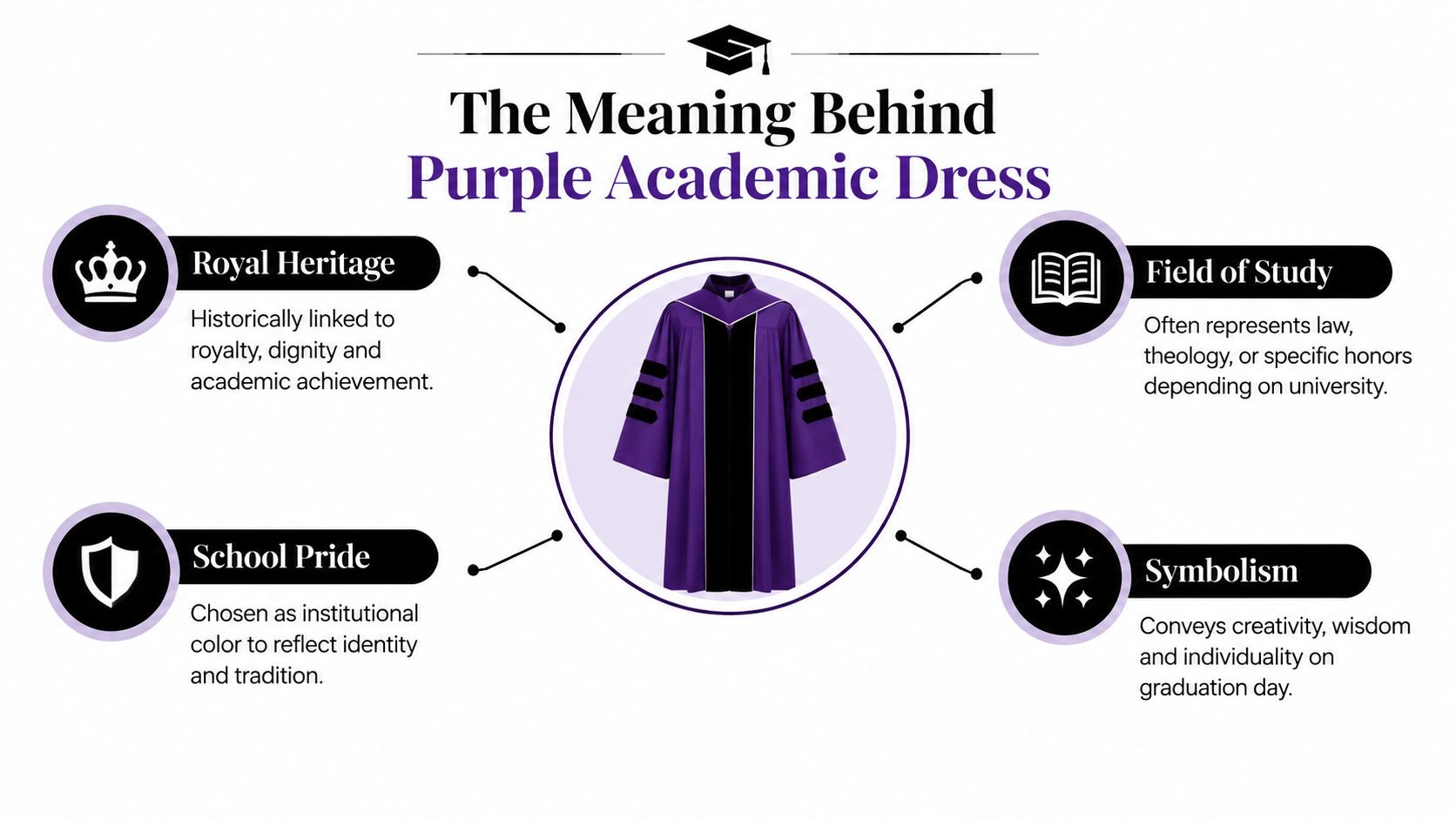
Purple has a documented place in academic dress history, but its meaning isn't universal. The University of Glasgow describes its MA hood as purple, connecting the shade with bell heather and identifying the choice as distinctive to Glasgow's academic dress tradition in its historical note on Glasgow academic dress. This example shows how a university can preserve a local tradition that doesn't necessarily match the color system used elsewhere.
In the United States, the Intercollegiate Code of 1895 standardized academic dress, and later academic-regalia summaries recorded purple velvet for Doctor of Law and related legal disciplines. Purple also carried older associations with rarity and prestige because Tyrian purple dye in ancient Rome was reserved for upper-class individuals due to its scarcity, as documented in the same academic-regalia history source.
Symbolism and official codes are different
A purple graduation cap and gown may suggest achievement, distinction, creativity, or institutional identity in a general ceremonial setting. Those impressions are visual and cultural. They don't automatically tell an observer what the graduate studied.
An official academic code works differently. Regalia color charts assign colors to disciplines, and references identify purple with law, jurisprudence, and related fields in some systems. A university guide to academic regalia colors identifies purple for law and jurisprudence, while broader color tables also associate purple with areas such as dental surgery, urban planning, architecture, and regional planning.
Other institutions may use purple or violet for theology or divinity. This variation is why a buyer in an international or multi-campus program shouldn't assume that an American-style chart applies everywhere.
Read the garment as a complete system
Color alone rarely provides the full answer. A purple element may appear on:
- Hoods, where velvet trim and lining communicate academic information.
- Doctoral facings, which can make purple part of formal degree-level regalia.
- Tams and tassels, which may follow institutional or degree conventions.
- Stoles, which often express school identity, honors, culture, or group affiliation.
Louisiana State University, for example, states that doctoral candidates wear customized purple regalia with full rounded sleeves and velvet facings in its doctoral academic regalia guidance. That is a specific institutional rule, not proof that every doctoral program uses purple.
The reliable interpretation is therefore conditional. Purple can signal law or jurisprudence under some formal systems, theology under others, doctoral distinction in a particular university, or school pride where the institution has selected it as a brand color. Check the commencement office's instructions before treating the color as a statement about the graduate's field. For broader background on how caps, gowns, hoods, and colors work together, consult this guide to what academic regalia means.
Choosing the Right Fabric and Fit for Purple Gowns
Fabric changes both comfort and appearance. Most purple graduation gowns use polyester-based material, because disperse dyes are engineered to hold color on polyester through washing, rubbing, perspiration, and light exposure. Textile research reports acceptable polyester dye systems reaching light-fastness in the 4–8 range and washing and rubbing performance in the 4–6 range in the cited testing context, which matters because saturated purple can reveal fading or abrasion more readily under repeated use (textile research on polyester dye performance).
Matte or velvet
A matte polyester gown gives purple a quieter, more academic appearance. It usually works well for large ceremonies, school distribution, and buyers who want a lightweight garment with a consistent surface. A shiny finish reflects more light and can make the shade appear brighter, particularly under stage lighting or direct sun.
Velvet is a different choice. It adds visual depth and a formal texture, but it can feel heavier and may show changes in direction when the fabric is brushed or compressed. Premium velvet is often better suited to doctoral regalia or ceremonial details than to a simple schoolwide gown.
Compare the specifications
A real product listing illustrates the type of information buyers should look for. One purple matte gown is listed in sizes from XS to XL, with height ranges from 4'6" to 6'5", a 600 g weight, 11 × 11 × 2 in dimensions, and polyester construction. A premium velvet version lists 900 g, 11 × 11 × 3 in, and a golden border (purple gown product specifications).
| Feature | Matte Polyester Gown | Premium Velvet Gown |
|---|---|---|
| Surface | Soft, subdued finish | Rich, textured finish |
| Typical use | High school, bachelor's, group ceremonies | Premium or doctoral presentation |
| Listed example | Polyester, 600 g | Velvet, 900 g |
| Listed dimensions | 11 × 11 × 2 in | 11 × 11 × 3 in |
| Detail example | Standard construction | Golden border |
| Buying priority | Mobility and easy coordination | Formal appearance and texture |
Measure before you order
Use height and the seller's size chart as starting points, then consider what you'll wear underneath. The gown should close comfortably without pulling across the chest or shoulders, and the sleeves shouldn't restrict your hands when you hold a program or diploma. Use a dedicated graduation gown measuring guide rather than choosing a size from everyday clothing.
Fit check: Try the gown with the shoes and clothing planned for the ceremony. A hem that looks fine in socks may feel too long with formal footwear or outdoor movement.
Inspect the cap separately. The crown should sit securely without compressing the forehead, while the mortarboard should remain level for photographs. If your program provides a hood, include its bulk when testing the neckline and shoulder area.
Coordinating Tassels, Hoods, and Stoles with Purple
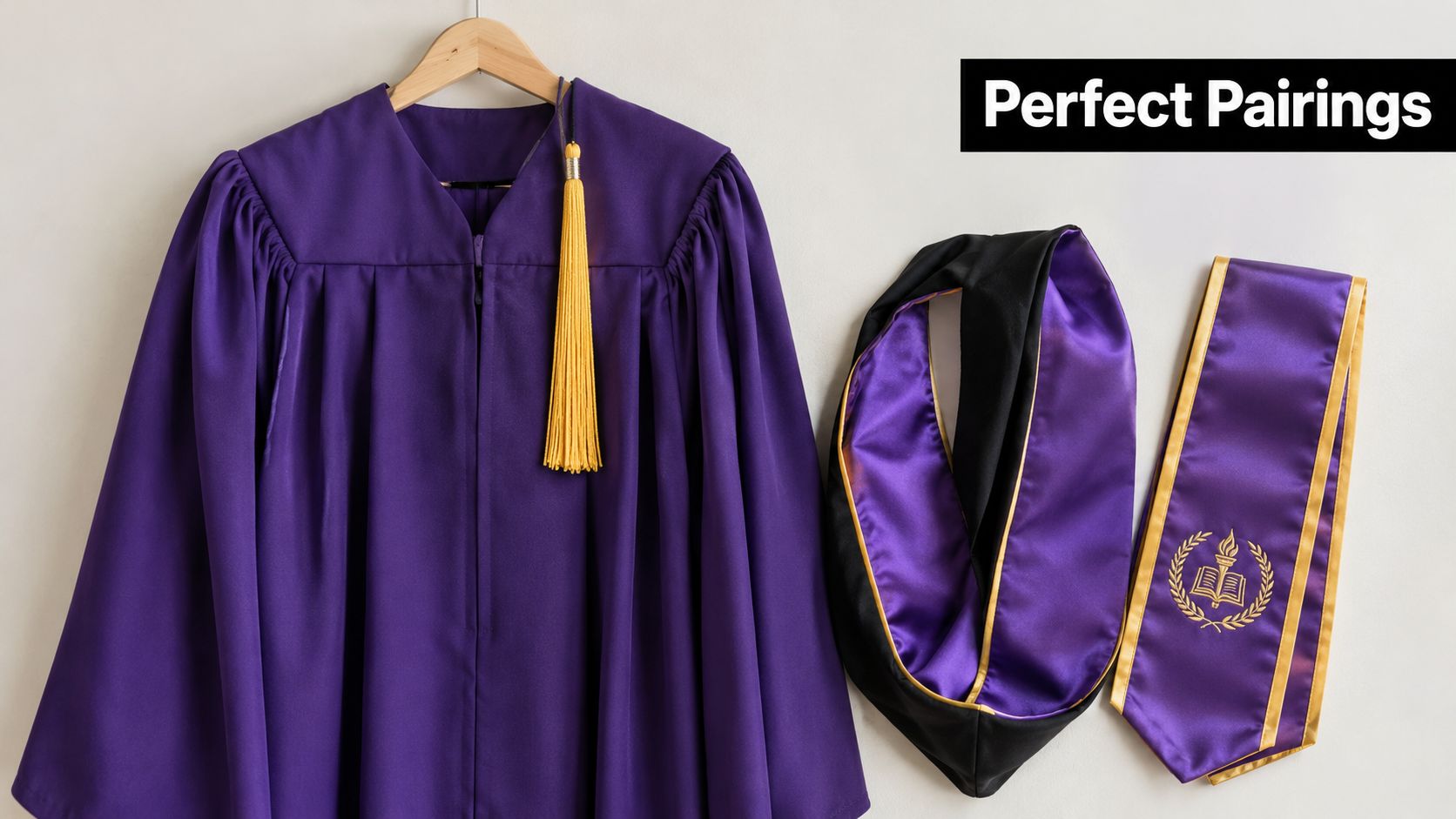
Purple becomes easier to style when each accessory has a defined role. The tassel usually adds a small contrast point to the cap, the hood follows degree and field conventions, and the stole can communicate honors, identity, membership, or school affiliation.
Build combinations by degree level
For a high school ceremony, a purple cap and gown with a matching purple tassel creates a unified appearance. A gold or white stole can add contrast, but it should match the school's approved accessories if the ceremony has a formal dress code.
A bachelor's graduate may wear a purple gown with a tassel in the university's designated color. If the gown is school-color apparel rather than discipline-coded regalia, don't add a hood because it looks complete. Hoods generally follow degree-level and academic-field rules, so confirm whether your ceremony requires one.
Master's and doctoral attire needs more caution. A hood's velvet edge and satin lining may identify the degree and field, while a doctoral gown may include velvet facings or rounded sleeves. In these cases, purple can appear in one component while the rest of the outfit remains black or another institutional color.
Choose contrast with purpose
Gold pairs naturally with purple because it creates a formal, celebratory contrast. White offers a cleaner, brighter effect and can make a deep purple gown look more pronounced. Silver, black, and school-specific colors can also work, but the safest choice is the color listed by the commencement office.
Custom stoles deserve the same care. A cultural, first-generation, veteran and military, nursing, HBCU, LGBTQ, international, Kente, serape, or Greek-life stole can carry personal meaning, but too many competing colors may make the outfit look visually crowded. Place the stole flat over the gown and check that it doesn't cover required hood or velvet details.
For a closer look at choosing a matching accessory, use this guide to graduation tassels. The right combination isn't the one with the most decoration. It's the one that preserves official academic details while leaving room for the graduate's identity.
Customization Options and School Requirements
A purple gown is only a good purchase if it meets the ceremony's rules. Start with the official commencement page, graduate handbook, or regalia notice. Confirm the approved gown color, cap style, hood requirement, tassel color, stole policy, and whether doctoral candidates need a tam or specialized facings.
Use a simple verification sequence
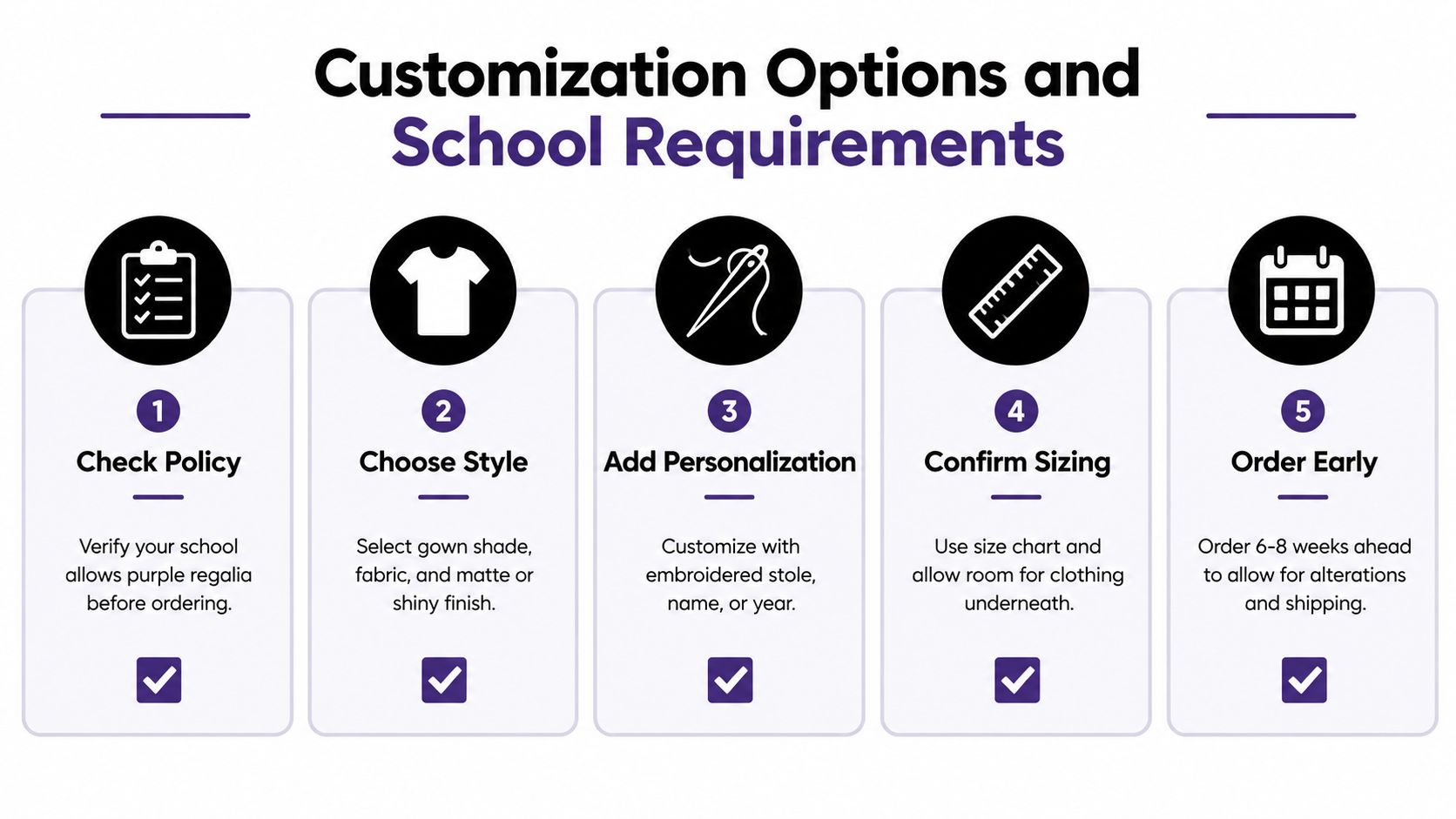
- Check the policy first. A school may use purple for every graduate, only for a particular degree, or only as a hood or trim color. A broad online chart can't override the campus instruction.
- Choose the shade and finish. Compare matte and shiny purple under the type of lighting expected at the venue. Ask whether the school has a specified shade, especially if several campuses share a ceremony.
- Add personalization carefully. Embroidered names, year date charms, diploma covers, honor cords, and custom stoles can make the outfit meaningful. Keep additions positioned so they don't hide required academic markings.
- Confirm sizing. Use the manufacturer's height and body measurements, and allow room for clothing underneath. Group buyers should collect measurements consistently rather than asking everyone to select a letter size without guidance.
- Order early. The supplied customization guide recommends ordering 6–8 weeks ahead to allow for alterations and shipping (purple regalia customization checklist). Because that timing appears in the infographic asset itself, use it as a planning target rather than waiting until ceremony week.
Plan for individual and group orders
Individual buyers should save the order confirmation, size selection, color description, and delivery details. For a school organization or cultural group, appoint one coordinator to approve artwork, confirm spelling, and maintain a list of sizes and accessory choices.
Graduation Attire offers purple high school and bachelor's cap-and-gown options, along with caps, tassels, hoods, stoles, honor cords, diploma covers, year date charms, and a school finder. Its catalog also includes custom stole categories such as international flags, first-generation, LGBTQ, veteran and military, nursing, HBCU, Kente, serape, and Greek life.
When the package arrives, inspect the shade, seams, closures, cap, tassel, and personalization immediately. Try everything on over the intended clothing, and contact the seller promptly if a component is missing, damaged, incorrectly embroidered, or inconsistent with the approved order.
Styling Tips for Photos and Ceremony Day
Purple changes character under different lighting. A deep purple matte gown can look formal and subdued indoors, while a shiny or blue-leaning purple may appear brighter under stage lights. Direct sunlight can also reveal differences between fabric surfaces, so a color that looks balanced on a product page may photograph more vividly outdoors.

Test the complete outfit
Take a quick phone photograph before the ceremony. Stand near a window, then try an indoor room with warmer lighting. Look for three things:
- Color balance: Does the purple look closer to the school shade, or does it shift toward blue, red, or an overly bright tone?
- Accessory contrast: Can you see the tassel, stole, and hood clearly, or do they blend into the gown?
- Surface behavior: Does satin create glare, or does velvet produce visible nap changes when you move?
Gold trim and a gold stole can create a polished, formal result against purple. White gives a sharper, high-contrast appearance. If the school requires a particular hood lining or tassel, coordinate the remaining accessories around that fixed element instead of adding another competing color.
Keep the graduate visible
Choose clothing underneath that won't create bulky lines at the neckline or sleeves. Neutral shoes generally keep attention on the regalia, while a small accessory in the school color can connect the outfit without distracting from the cap and gown. Hair should allow the cap to sit level, and long hair may need to be positioned so it doesn't push the mortarboard upward.
For outdoor portraits, check the forecast and bring a way to protect the gown during transport. For nontraditional ceremonies, private celebrations, or family photos, the styling rules may be more flexible, but official university ceremonies still take priority. A purple gown chosen as a school-color statement shouldn't be presented as proof of a law, theology, or doctoral field unless the institution assigns that meaning.
Your Purple Regalia Purchase Checklist
Use this checklist before you place the order:
- Confirm the meaning: Ask whether purple is a school color, a field code, a degree-level detail, or a personal choice.
- Read the ceremony policy: Verify the approved gown, cap, hood, tassel, stole, and doctoral accessories.
- Select the fabric: Choose matte polyester for a restrained finish or velvet when texture and formal presentation matter.
- Check the measurements: Compare your height and body measurements with the seller's chart, and allow room for clothing underneath.
- Test the color: View the shade in indoor and outdoor light, especially if photographs are important.
- Coordinate accessories: Select contrast colors that support, rather than obscure, the purple gown and required academic markings.
- Review customization: Check names, dates, embroidery, stole artwork, and group-order details before approval.
- Plan delivery: Use the supplied 6–8 week ordering recommendation for customization, alterations, and shipping (customization guide for purple regalia).
- Inspect immediately: Try on every component as soon as it arrives and resolve problems while alternatives are still available.
A purple graduation cap and gown can be traditional, institutional, field-specific, or expressive. Once you confirm the rules and choose the fabric, fit, and accessories deliberately, the color becomes a confident part of the celebration rather than a source of uncertainty.
Graduation Attire offers purple high school and bachelor's cap-and-gown options, plus academic hoods, tassels, custom stoles, honor cords, diploma accessories, and sizing guidance for different ceremony needs. Visit Graduation Attire to compare purple regalia and choose the components that fit your school requirements and personal style.