

Think of the traditional square graduation cap—the mortarboard. It’s the iconic symbol of academic achievement for high school and bachelor's degrees. But when a graduate has gone further, putting in the years of advanced study for a master's or doctorate, their headwear often gets an upgrade. This is where the graduation tam comes in.
A graduation tam is a plush, soft-sided cap, usually made from luxe velvet, that signifies a higher level of academic accomplishment. It's reserved for those earning master's or doctoral degrees and is also the preferred headwear for university faculty and officials. Its distinguished design and premium feel are an immediate visual cue of advanced scholarship, making it a key part of any masters regalia or doctoral regalia.
Understanding the Graduation Tam

When you spot a graduate in a tam, you’re looking at someone who has poured immense dedication into their field. The standard mortarboard cap is the foundation of academic regalia, but the tam represents the next tier—a symbol of true mastery. A graduation tam is more than just a hat; it's a statement about your academic journey.
Its soft velvet construction offers a far more comfortable and distinguished alternative to the rigid, flat mortarboard. This difference isn't just about style; it’s an intentional choice that creates a clear visual separation between undergraduate and postgraduate scholars on commencement day.
What Defines an Academic Tam
A graduation tam is much more than just a fancy hat; it’s a specific piece of academic regalia with its own rich history and traditions. It evolved over time as a more prestigious option for those who had reached the upper echelons of academia.
According to long-established academic dress codes, tams are specifically designated for master’s and doctoral graduates. This signals their deep expertise and commitment to their discipline. You can see how the tam fits into the bigger picture by exploring the full tradition of the graduation cap and gown.
To help you get a clearer picture, this table breaks down the tam's key features.
Graduation Tam at a Glance
This table summarizes the core attributes of a graduation tam, helping you quickly grasp its key features and purpose within academic tradition.
| Attribute | Description |
|---|---|
| Primary Wearers | Master's & doctoral graduates, university faculty, and academic officials. |
| Material | Typically crafted from high-quality black velvet for a premium look and feel. |
| Shape | A soft, multi-sided crown that gathers into a comfortable headband. |
| Structure | The number of sides (four, six, or eight) often denotes academic level. |
| Tassel | Can be either a standard tassel or a thicker, more ornate bullion tassel. |
As you can see, every detail of the tam is intentional, from its material to its structure.
The number of sides on the tam is particularly significant. While four-sided and six-sided versions are common, the eight-sided tam is most closely associated with doctoral degrees and senior faculty members. It represents the very pinnacle of academic achievement. This deliberate design ensures that faculty and advanced degree holders are easily recognizable and honored during the ceremony.
The Story Behind the Academic Tam
The graduation tam is far more than just a hat; it’s a piece of living history with roots stretching all the way back to the scholarly circles of medieval Europe. Long before the grand commencement ceremonies we know today, academics wore specific clothing to set themselves apart. Over centuries, these traditions shifted and changed, but the core idea of using attire to signify intellectual achievement never faded.
As higher education expanded, so did the need for a shared visual language. The rise of graduate schools in America during the 19th century created a new class of scholars who had poured years into advanced study. This prompted a push to standardize academic dress, creating a system that could visually represent these incredible educational milestones. Suddenly, a simple cap and gown just weren't enough to show the difference between a bachelor's and a doctoral degree holder.
The Standardization of Academic Dress
To bring a little order to the chaos of varied customs, an American Intercollegiate Commission met to formalize the designs for caps, gowns, and hoods. This effort was absolutely critical in shaping the regalia we recognize today.
Academic headwear, in particular, has a complex past. Records show that caps and tams generated more debate than any other part of academic dress, with universities adjusting regulations multiple times between the 16th and 20th centuries.
All that careful consideration led to the official designation of the tam as a more distinguished alternative to the flat mortarboard. It was reserved for those who had reached a higher level of scholarship, quickly becoming an emblem of expertise and authority.
The modern graduation tam is deeply connected to this history, with the commission's work in 1894 codifying designs and colors that helped formalize its use. You can explore more about these historical regulations and their impact on academic dress on Wikipedia.
Ultimately, the tam's adoption was directly tied to the growing importance of postgraduate education. It became a powerful symbol, instantly communicating that the wearer was not just a graduate, but a master or a doctor in their field. This single distinction transformed the tam from mere headwear into an enduring emblem of the highest levels of academic pursuit.
Choosing Between a Tam and a Mortarboard
When it comes to graduation day, the headwear you choose is more than just an accessory—it's a powerful symbol of your entire academic journey. The two main options, the graduation tam and the classic mortarboard, each tell a different story about your achievements, and the choice isn't about style, but about a rich tradition of academic hierarchy.
The most fundamental difference comes down to the degree you've earned. The mortarboard, with its iconic flat square top, is the universal symbol for graduates earning high school diplomas and bachelor’s degrees. Think of it as representing the foundational stage of higher education. You can explore a variety of graduation caps to see this standard design.
The graduation tam, on the other hand, is a plush, multi-sided velvet cap reserved for those who have gone further. It signifies mastery and is worn by graduates receiving master’s or doctoral degrees, as well as by university faculty members.
Key Distinctions at a Glance
The differences go beyond academic level and touch on the materials and overall feel. A tam's soft velvet construction gives it a sense of distinction and comfort, setting it apart from the more rigid design of a mortarboard. For a better understanding of the right way to wear either one, you can check out our guide on how to put on your graduation cap.
The choice between a tam and a mortarboard is dictated by academic protocol. Wearing a tam for a bachelor's degree ceremony, for example, would be a break from long-standing tradition, much like a student wearing a professor’s doctoral robes.
To make the comparison crystal clear, let's look at the core differences between these two iconic pieces of headwear.
Tam vs Mortarboard: A Head-to-Head Comparison
This table breaks down the key distinctions, helping you see at a glance which piece of regalia is right for your specific achievement.
| Feature | Graduation Tam | Mortarboard Cap |
|---|---|---|
| Academic Level | Reserved for Master's, Doctoral, and Faculty members. | Standard for High School and Bachelor's degree graduates. |
| Material | Typically made from high-quality, plush velvet. | Usually crafted from polyester or a similar matte fabric. |
| Shape | Soft, multi-sided crown (four, six, or eight points). | A rigid, flat square board attached to a skullcap. |
| Prestige | Symbolizes advanced scholarship and academic authority. | Represents the completion of foundational higher education. |
Ultimately, whether you're wearing a tam or a mortarboard, you're participating in a tradition that celebrates hard work and dedication. Each piece has its own unique place in the academic world, serving as a proud symbol of a milestone you've worked incredibly hard to achieve.
Understanding the Different Types of Tams
Just like degrees themselves, not all graduation tams are created equal. The most obvious difference you’ll notice is the shape—specifically, how many sides or points it has. This might seem like a small detail, but it’s actually a key part of the visual language of academia, helping everyone instantly recognize different levels of advanced degrees.
The shape of a tam is a non-verbal cue to a graduate's standing. While some universities have their own unique traditions, a general hierarchy has been established over time. This system brings a sense of order to the commencement ceremony, allowing everyone to spot the scholars who have reached the highest rungs of the academic ladder.
This diagram shows how academic headwear branches into different types based on tradition and degree level.
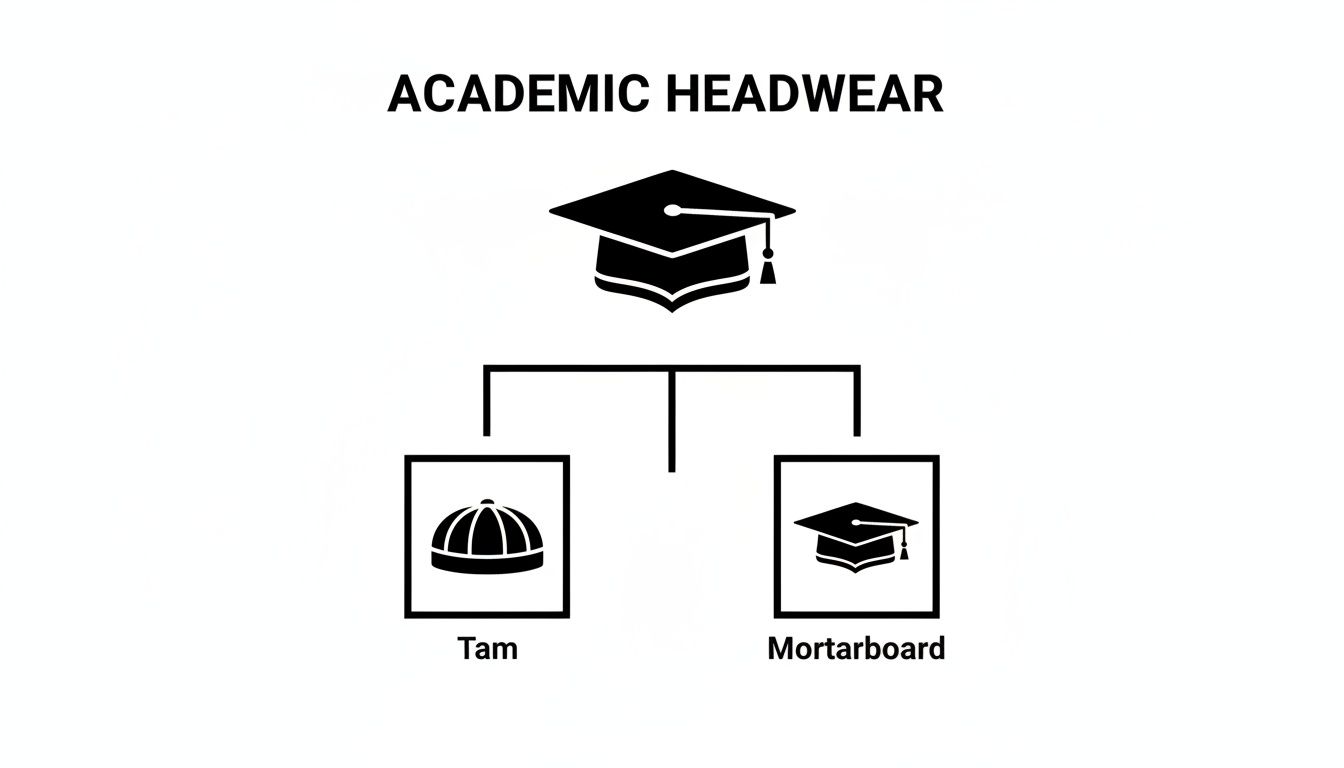
As you can see, the tam sits in its own category, distinct from the standard mortarboard and reserved for higher academic achievements.
Decoding the Sides and Materials
The number of sides is a tam's most significant feature, with each count representing another step up the academic ladder. Nailing this detail is the key to choosing the right regalia for your degree.
- Four-Sided Tam: While less common, the four-sided velvet tam is sometimes an option for certain master's programs. It's also a popular choice for faculty who want a more comfortable alternative to a mortarboard.
- Six-Sided Tam: This is the go-to for many master's degree recipients. A six-sided tam offers a clear and widely recognized step up from undergraduate headwear, marking a significant academic milestone.
- Eight-Sided Tam: The pinnacle of academic headwear. The eight-sided doctoral tam is the gold standard for Ph.D. holders and those with other terminal degrees. Its distinguished shape is a powerful symbol of the highest academic attainment.
Beyond its shape, a tam’s material and tassel add another layer of distinction. Most are crafted from luxurious black velvet, giving them a rich appearance that immediately sets them apart from the simple fabric of a mortarboard.
While a standard tassel is common, many doctoral graduates opt for a permanent, more ornate bullion tassel. This thick, metallic gold tassel is sewn directly to the tam, serving as a lasting mark of doctoral status. Our selection of graduation tassels includes options for every academic level.
At the end of the day, choosing the right tam—from its number of sides to the style of its tassel—is about making sure your regalia perfectly aligns with your degree and your university’s honored traditions.
How to Wear Your Graduation Tam Correctly
Nailing the right way to wear your graduation tam is key to looking sharp and feeling confident on your big day. Unlike a simple mortarboard, the tam has a very specific fit and orientation that signals its distinguished status. Getting it right ensures you look fantastic in every photo and feel comfortable from the processional to the recessional.
First things first, let’s talk placement. Your tam should sit squarely and level on your head—not tilted back or off to one side. The internal headband needs to be snug enough to stay put as you walk across the stage, but not so tight that it becomes uncomfortable. Think of this secure, level fit as the foundation for a dignified look.
Positioning and Tassel Etiquette
Once the tam is sitting perfectly, your attention should turn to the tassel. The tassel is meant to be draped over the left front side of the tam. For doctoral graduates, this placement is usually set in stone, as most doctoral tams come with a beautiful bullion tassel that’s permanently attached.
A common point of confusion is the whole tassel-moving tradition. For doctoral candidates wearing a tam, the tassel typically stays on the left throughout the entire ceremony, since the degree is already considered conferred. In some ceremonies, graduates might turn the entire tam just a bit to shift the tassel's position, but it generally starts and ends on the left.
Follow these simple steps for a perfect fit:
- Place the Tam: Position the tam flat on your head, making sure it’s level from front to back and side to side.
- Adjust for Comfort: The internal band should feel secure enough to prevent slipping without causing any pressure.
- Position the Tassel: Drape your tassel over the left front quarter of the tam. Check that it hangs freely and isn’t caught on anything.
After the ceremony is over, you’ll want to preserve your tam. Store it in a cool, dry place away from direct sunlight, which can cause the velvet to fade over time. For the best long-term protection, consider using one of our dedicated regalia garment bags and accessories to keep it in pristine condition for years to come.
Finding the Right Graduation Tam for Your Ceremony
Your graduation day is a landmark achievement, and the regalia you wear should absolutely honor the significance of the moment. Choosing a high-quality graduation tam from a trusted supplier isn't just about looking good—it's about making sure you feel your best. This is more than a hat; it's the final piece of an outfit that represents years of incredible hard work and dedication.
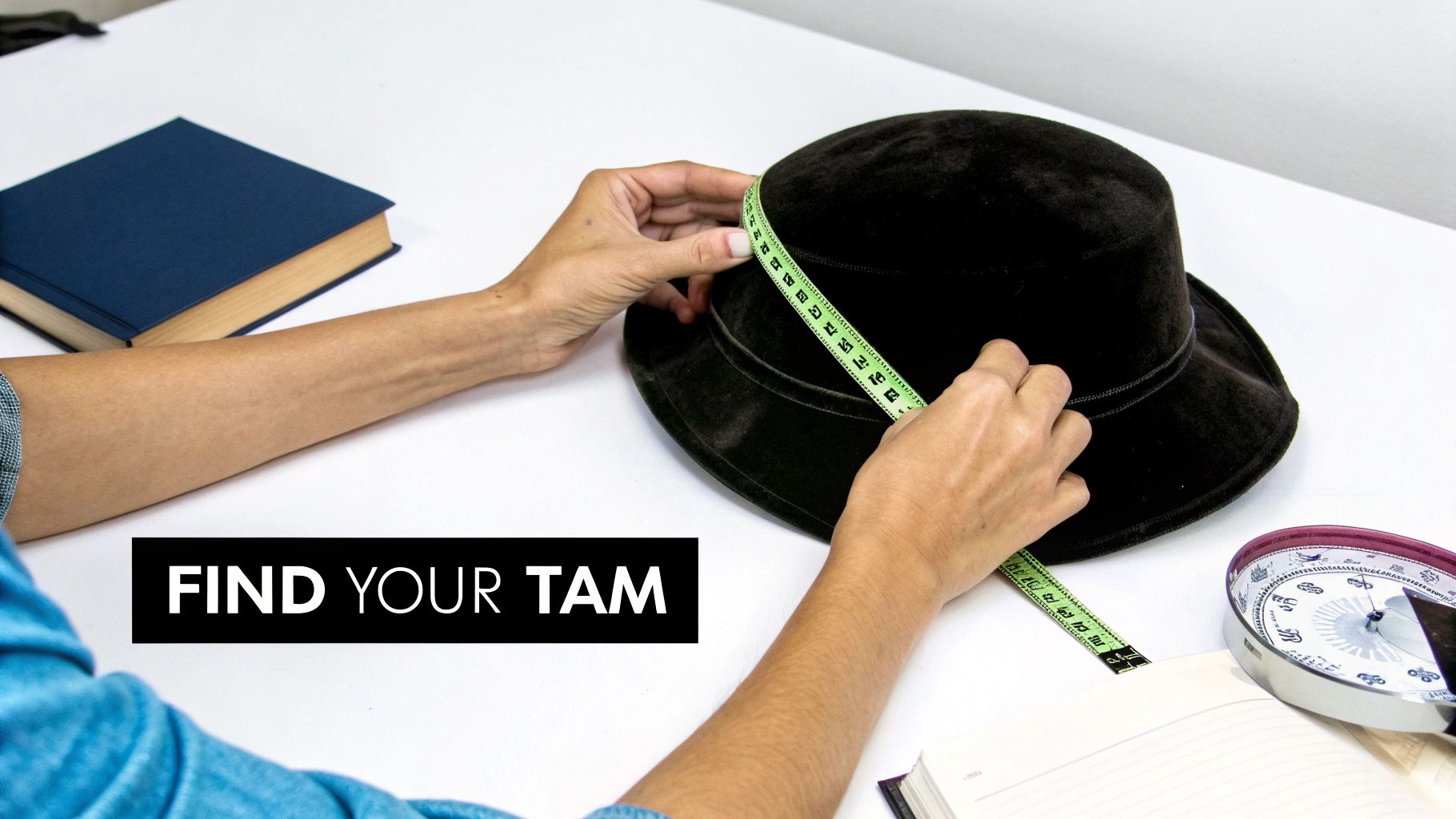
When you start looking for your tam, the number one thing to focus on is quality craftsmanship. Think of it this way: premium materials, precise construction, and a comfortable fit are non-negotiable. This guarantees your regalia not only meets academic standards but will also last for years as a cherished keepsake.
What to Look for in a Supplier
Finding the right supplier makes all the difference in the world. You need a company that genuinely understands academic traditions and puts customer satisfaction first to avoid any last-minute stress.
Here are the essential factors to keep in mind:
- Premium Materials: Look for rich, plush velvet that truly conveys the distinction of your advanced degree. High-quality fabric is what ensures your tam looks pristine in photos and feels comfortable throughout the entire ceremony.
- Precise Construction: A well-made tam offers a secure, comfortable fit that you won't have to think about. The internal headband should be sized correctly to prevent any slipping, allowing you to focus on your achievement without distraction.
- Reliable Service: Let's be honest, timely delivery is critical. A supplier with a proven track record and tons of positive reviews gives you the peace of mind that your regalia will arrive correctly and on time for your big day.
Your academic attire is a direct reflection of your accomplishment. Investing in a well-crafted tam ensures your appearance aligns with the prestige of the degree you've earned, honoring both your personal journey and institutional tradition.
Our commitment to quality is clear in every single piece we offer, from our classic doctoral graduation tam and gown sets to our full range of faculty regalia. With over 10,000 positive reviews and tools to match your school’s specific requirements, we make finding the perfect graduation tam simple and totally stress-free.
Your Top Questions About Graduation Tams
As graduation gets closer, a few questions about tams are bound to pop up. Let's get them answered so you can finalize your plans and wear your regalia with total confidence on the big day.
Getting the Details Right
Can I wear a tam for my bachelor's degree?
It's a common question, but the graduation tam is traditionally reserved for those earning master's and doctoral degrees. It's also the standard headwear for university faculty. For a bachelor's degree, the classic mortarboard cap is the way to go. That said, it’s always smart to double-check your university’s specific academic dress code, just in case.
What is the difference between a 6-sided and an 8-sided tam?
The main difference here is pure symbolism. The eight-sided tam is almost universally associated with doctoral degrees (like a Ph.D. or Ed.D.), signifying the highest level of academic achievement. The six-sided tam is most often worn by those receiving a master's degree. Of course, university guidelines can vary, so a quick check is never a bad idea.
Does the tassel color on a tam have a special meaning?
Yes, it absolutely does! The tassel color on your tam is a visual code for your specific field of study. For instance, light blue represents Education, while a vibrant golden yellow stands for Science. Doctoral degrees often get an extra touch of distinction with a metallic gold tassel.
For anyone curious about the wider world of headwear and how it's decorated, you can explore various customization techniques for headwear that go far beyond academic tradition.
At Graduation Attire, we provide high-quality tams, gowns, and accessories designed to honor your achievement. Find the perfect regalia to celebrate your ceremony at https://www.graduationattire.com.