

You're standing backstage with a white graduation gown over your arm, checking the sleeves, the hem, and the clock. The fabric looks crisp under ordinary room lighting, but you're wondering whether it will turn sheer under stage lights, whether the length will work with your shoes, and whether your school allows pure white or requires a particular style.
Those questions matter because white graduation gowns can carry both ceremonial meaning and strict practical requirements. A gown may need to represent a school tradition, fit over clothing comfortably, photograph well, and arrive early enough for inspection and alterations. A beautiful garment that fails one of those tests can create avoidable stress on commencement day.
This guide follows the buying process from beginning to end. You'll learn why white attire became associated with graduation, how institutional rules can change the acceptable shade and silhouette, how to assess opacity and fabric weight, and how to choose a size that supports comfortable movement. You'll also find guidance on caps, tassels, stoles, academic hoods, customization, care, storage, and ordering logistics.
For a broader explanation of how the pieces work together, review this guide to graduation caps and gowns. Then use the recommendations below as a practical checklist, whether you're shopping for one graduate, coordinating family attire, or organizing regalia for an entire class.
Understanding Key Concepts
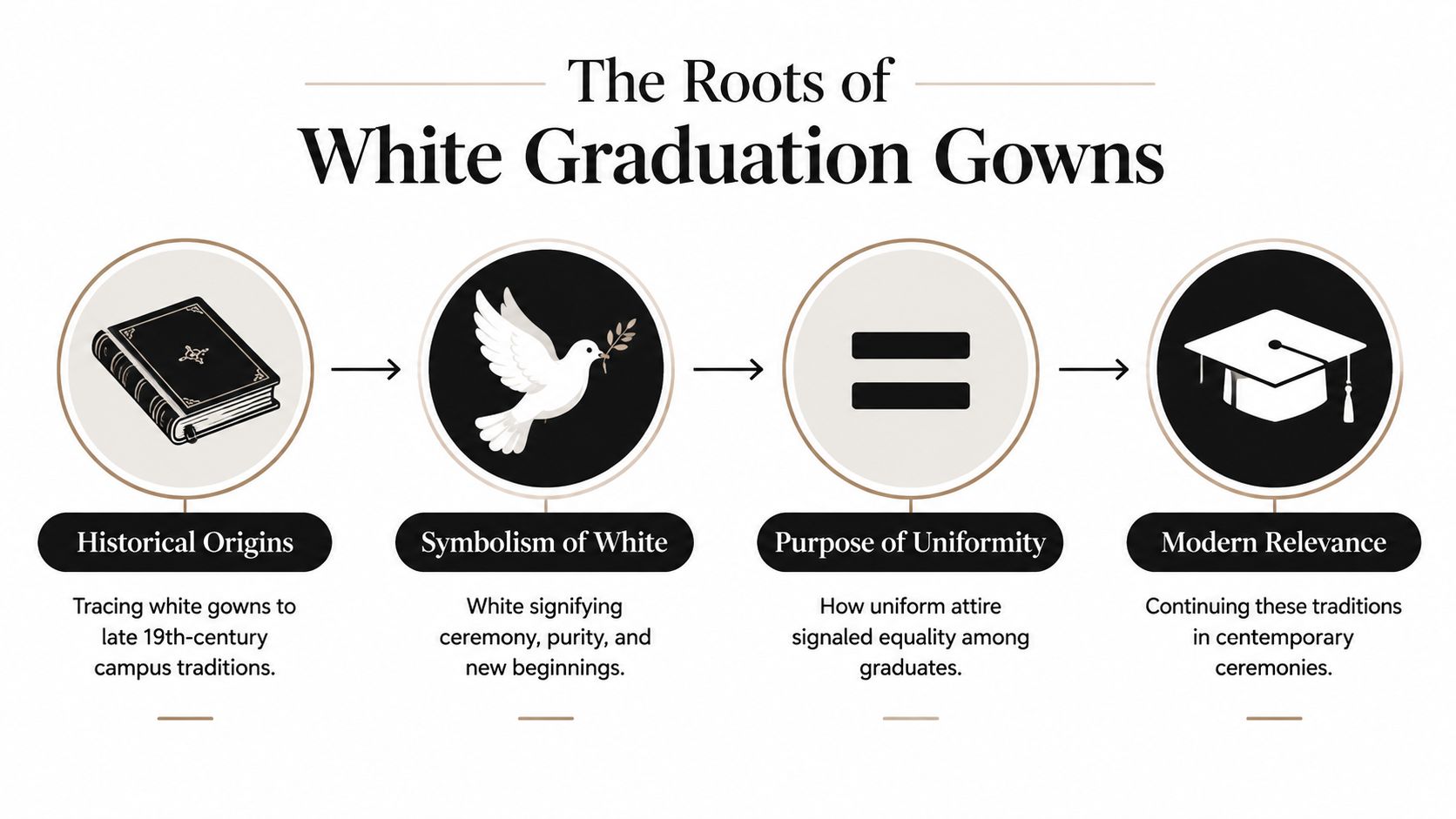
White graduation attire didn't begin as a passing fashion preference. White dresses for women's graduation ceremonies became a recognized tradition in the late 19th century, with university archives placing the practice in the 1870s and later decades. The Ohio State University's campus fashion archive documents women wearing white dresses for graduation, while Spelman College formally established a white-dress policy in 1900 to create a uniform appearance and emphasize the significance of commencement. You can review the historical record in Ohio State University's archive on women in white.
The original purpose was broader than decoration. A shared white appearance helped graduates look united and visually equal during a period when women's participation in higher education was expanding. The custom later reached high schools and women's fraternities, turning white graduation clothing into a wider social signal rather than a tradition limited to one campus.
Tradition is not the same as a universal rule
The word “traditional” can confuse buyers. It doesn't mean every school requires a white gown or white dress. Some institutions use white attire as part of a formal commencement identity, while others permit graduates to choose from several colors and silhouettes. A school may also distinguish between the white dress worn beneath an academic robe and a white academic gown assigned to a particular program, honor, or ceremony.
The academic costume system developed separately. In 1935, the American Council on Education adopted intercollegiate designs and established an Academic Costume Code, helping standardize the cap-and-gown system used across many institutions. That distinction matters: a white dress tradition can continue alongside standardized academic regalia without the two having the same historical origin.
Before ordering, identify which of these situations applies:
- The school recommends white attire. You'll have some flexibility, but a simple, opaque white dress or gown will usually fit the visual expectations.
- The school requires white attire. Check the permitted shade, length, neckline, sleeve design, and embellishment rules.
- The program assigns a gown color. Follow the program's academic costume requirements rather than assuming white is appropriate.
- The ceremony includes a hooding or specialty event. Confirm whether you need a master's hood, doctoral hood, tam, velvet trim, or another item in addition to the gown.
White also carries cultural meaning, and that meaning isn't identical everywhere. In many Western contexts, it's associated with purity, a blank slate, and new beginnings. Coverage from The California Aggie on white graduation clothing also notes that white can have different associations in other cultures, including connections with death in some Asian cultures. A personal or family preference may therefore be just as relevant as a fashion decision.
Practical rule: Treat your institution's written ceremony guide as the final authority. Tradition can explain a color, but the dress code determines what you can wear.
Key Aspects Of White Graduation Gowns
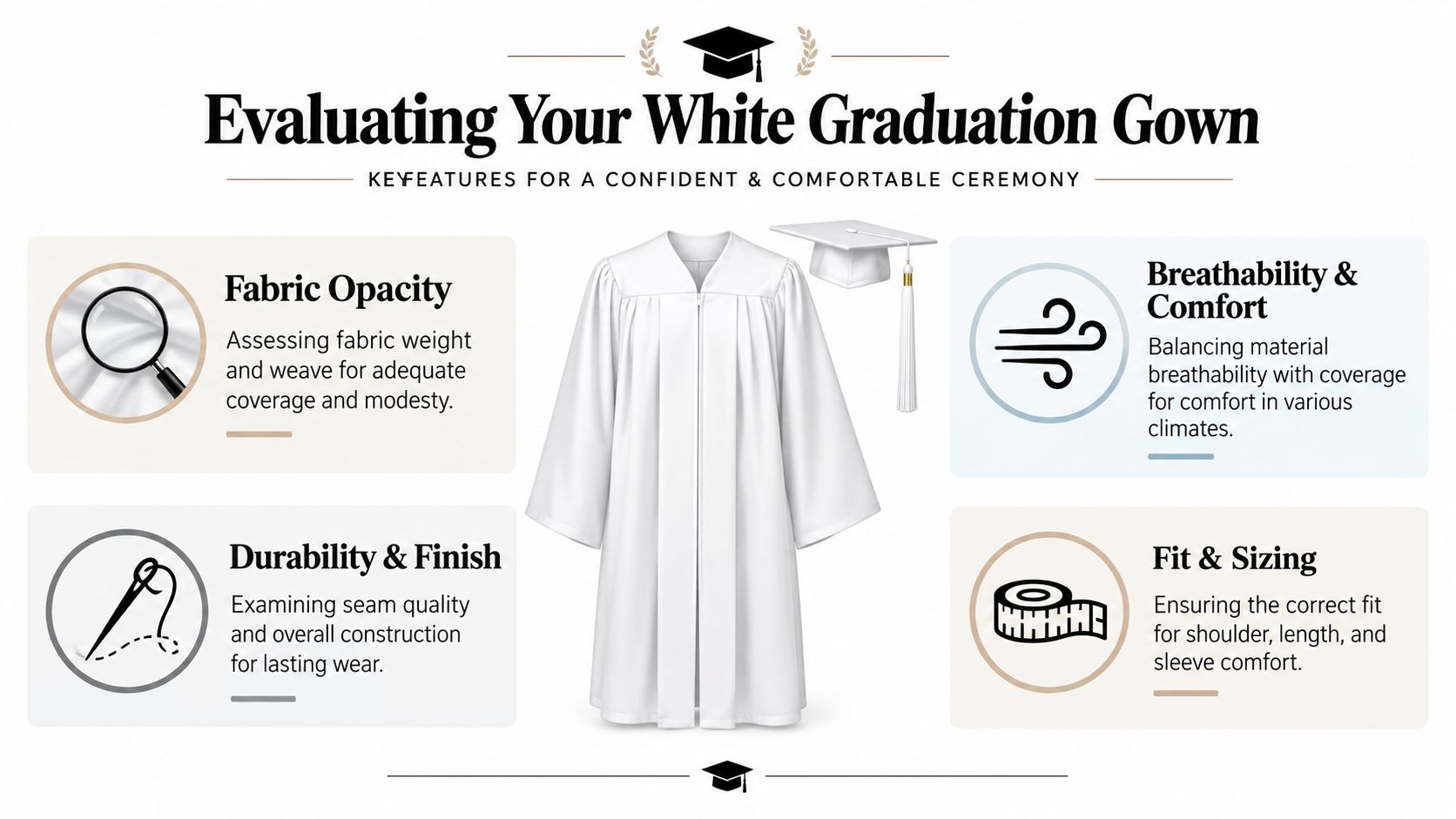
A reliable white gown balances four requirements: coverage, comfort, movement, and fit. White fabric exposes weaknesses that darker fabric can hide, especially when bright lighting passes through the garment or when the material stretches across the shoulders and chest.
Start with opacity, not appearance
White garments are more likely to show through because the fabric contains little or no dye to block transmitted light. Instead, coverage depends on fabric density, weight, and weave structure. A tight poplin or twill weave generally blocks more light than a lightweight, loosely woven material, while lining or underlining adds a dependable barrier.
Fabric weight gives you a useful comparison point. Guidance for white academic-style apparel places materials below about 100 GSM in the typically transparent range, 100 to 130 GSM in the semi-transparent range, and 130 to 160 GSM in the sufficiently opaque range. A benchmark of 200 GSM or higher is a safer target when reliable coverage matters in bright conditions. These ranges come from technical guidance on choosing opaque white fabric.
GSM means grams per square meter. Think of it as a way to compare fabric mass rather than relying on a product photograph. A higher GSM can improve opacity and structure, but dense fabric may feel warmer during a long ceremony. Matte polyester and structured weaves often provide a useful compromise because they can resist wrinkles while remaining practical for indoor or outdoor events.
Use a simple light test before approving a garment:
- Hold the fabric against strong light. If you can see your hand contours or skin tone, expect the material to look sheer when worn.
- Test stretched areas. A fabric that looks opaque when relaxed may become translucent across the shoulders or bust.
- Check the lining. Lining should cover the areas that move and stretch, not stop at an inconvenient seam.
- Test under flash or bright indoor lighting. Ceremony photography can reveal transparency that ordinary room lighting misses.
Choose a fit that supports movement
A graduation gown shouldn't fit like a precisely fitted blazer. You need room to walk, sit, raise your arms, and wear clothing underneath without pulling at the shoulders. At the same time, excessive volume can create folds that look untidy and make the sleeves or hem difficult to manage.
Measure while wearing the kind of clothing you expect to wear under the gown. Record chest or bust, waist, shoulder comfort, and height according to the retailer's chart. Don't select a size solely by your usual dress or shirt size, since academic apparel often uses different proportions.
Length deserves special attention. A gown that's too short can expose the clothing underneath, while one that's too long can catch under your shoes or create a trip hazard on stairs. Compare your measurements with the retailer's instructions, and use this explanation of graduation gown length when deciding whether the hem should fall around the ankle, below the knee, or at another specified point.
A useful home fitting includes three movements:
- Walk at a normal pace and check whether the hem brushes your footwear.
- Sit in a chair and confirm that the back and sleeves don't pull.
- Raise both arms as if greeting the audience, then check whether the shoulders restrict motion.
Build a coordinated regalia set
A white gown creates a clean background, so accessories become the visual points of contrast. Match the cap, tassel, stole, cords, hood, and footwear to the school's instructions before adding personal details.
A basic set may include:
- Mortarboard or tam: Choose the headwear assigned to your degree or ceremony.
- Tassel: Verify the required color and placement before entering the processional.
- Stole: Confirm whether the school permits honor, cultural, first-generation, veteran, nursing, Greek-life, or organization stoles.
- Academic hood: Master's and doctoral ceremonies may require a hood with degree-specific colors.
- Honor cords and medals: Wear only approved items, placing them so they don't crowd the neckline or interfere with the hood.
White is especially sensitive to texture and shine. Matte surfaces tend to look controlled in photographs, while very glossy fabrics can reflect strong light. A simple silhouette also leaves room for cords and stoles to remain legible instead of competing with decorative details.
White should work like the background of a formal portrait. It needs to support the cap, hood, stole, and graduate, not compete with them.
Customization Options And Institution Rules
Customization starts with permission, not embroidery. Before choosing a white graduation gown with a logo, colored trim, decorative sleeve, or personalized stole, find the official commencement guide and identify which parts are mandatory.
A school rule can be surprisingly specific. For example, Mercy High School's graduation dress requirements require a floor-length white gown and prohibit ivory or off-white shades. The same rules prohibit strapless, backless, heavily beaded, off-the-shoulder, one-strap, mermaid, and high-low styles. A gown that looks acceptably white online may therefore fail inspection if its shade or cut falls outside the school's definition.
Use a four-step approval check
First, confirm the shade. “White,” “soft white,” “ivory,” and “off-white” aren't interchangeable when a school specifies a precise color. Ask the school office or coordinator whether a swatch or product photograph needs approval.
Next, confirm the silhouette. Look for requirements involving floor length, sleeves, neckline, closures, embellishment, or train and hem design. Don't assume that a fashionable white dress will fit beneath a formal robe.
Then, confirm the regalia. A bachelor's ceremony may require a cap and gown, while a master's or doctoral ceremony may add a hood or tam. Specialty colors can signal degree fields or institutional affiliations, so use the school's guide rather than selecting colors based on personal preference.
Finally, confirm personalization limits. Embroidered logos, class years, names, and organization details may need written approval. Stoles often offer more room for identity and recognition than the gown itself, but they still need to fit the ceremony's rules.
For readers coordinating uniforms or event apparel across a group, this practical buyer's guide for uniforms offers a useful framework for comparing specifications, samples, customization, and delivery details. The same habits apply to academic apparel: define the requirement, approve the sample, then place the larger order.
Match the accessory to the message
Custom stoles can recognize identity and achievement without changing the base gown. Depending on institutional policy, graduates may consider designs representing first-generation status, cultural heritage, nursing, military service, LGBTQ identity, HBCU affiliation, Greek life, or an international flag. Review the available formats in this guide to white graduation stoles, then compare the stole's width and placement with honor cords and academic hoods.
For group orders, request a physical or digital proof before production. Check spelling, capitalization, logos, colors, and placement. A coordinator should also confirm the approved size range, garment measurements, packaging method, shipping destination, and who will handle exchanges.
Customization needs a clear timeline because embroidered or printed pieces may require approval before production begins. Leave room for proof review, corrections, delivery, inspection, and any sizing exchanges. Rush shipping can help with transportation, but it can't always solve a late design approval or an incorrect bulk specification.
Examples Of White Gown Buying Scenarios
The right white graduation gown depends on the ceremony around it. A high school graduate walking across an outdoor stage has different needs from a doctoral candidate wearing a hood during a formal indoor ceremony. The common thread is a deliberate check of rules, fabric, fit, accessories, and delivery before the event.

The high school graduate
Maya's school requires a white gown and wants a consistent appearance in the class photographs. Her family first checks the dress code for shade, hemline, sleeves, and embellishment. Because the ceremony takes place outdoors, they prioritize a structured but breathable fabric and avoid unnecessary volume that could become uncomfortable in warm weather.
They test the gown over the intended dress and shoes. The family also photographs the complete outfit in daylight, checking for show-through around the shoulders, front closure, and sleeves. A simple cap and the school-approved tassel complete the set, while personal jewelry stays minimal so it doesn't compete with the school's visual uniformity.
The bachelor's graduate
Jordan's university provides a black academic robe but allows personal clothing beneath it. Jordan chooses a matte white gown set with enough room for a shirt and trousers, then checks the sleeve length against the university's size chart. The main concern isn't decorative styling. It's whether the gown sits smoothly during a long indoor ceremony and remains neat during the stage walk.
The order checklist includes the cap, tassel, gown, and any approved honor cords. Jordan inspects the seams and closure as soon as the package arrives, then rehearses walking and sitting in the full outfit. A trial matters because the gown can feel different once the cap, cords, and clothing layers are all in place.
The master's candidate
Priya is attending a hooding ceremony, so the academic hood is as important as the white robe. She confirms the degree-level hood colors with the institution and checks whether the hood attaches to the gown or requires a separate fastening method. The gown needs enough shoulder space for the hood to lie flat without pulling the neckline.
Because the ceremony includes close-up photographs, Priya chooses a low-sheen fabric and checks the white tone against the hood's trim. She also avoids bulky collars and large necklaces, which could crowd the hood. The full fitting includes stairs, sitting, and turning, since the hood can shift if the gown is too loose or the shoulders are too narrow.
The doctoral honoree
A doctoral candidate has more components to coordinate. The institution may require a doctoral gown, velvet facings, a tam, and a custom hood rather than a basic cap-and-gown set. The candidate confirms every color and degree detail with the graduate school before ordering and requests approval for any personalization.
The practical question remains the same across all four scenarios: will the garment perform under real ceremony conditions? Coverage, heat management, movement, and photography deserve attention because the gown may face bright indoor lighting, outdoor glare, extended standing, and repeated photographs. This practical gap is also highlighted in current coverage of white graduation dresses under robes, which points beyond symbolism toward the way fabric and construction work during an actual ceremony.
Care Storage And Ordering Timelines
White regalia looks polished when it arrives, but packaging can leave creases and storage can introduce dust, discoloration, or unwanted folds. Treat the gown like a formal garment from the moment you open the package. Early inspection gives you time to resolve a defect or sizing problem while support and exchange options are still available.
Follow a five-step preparation routine
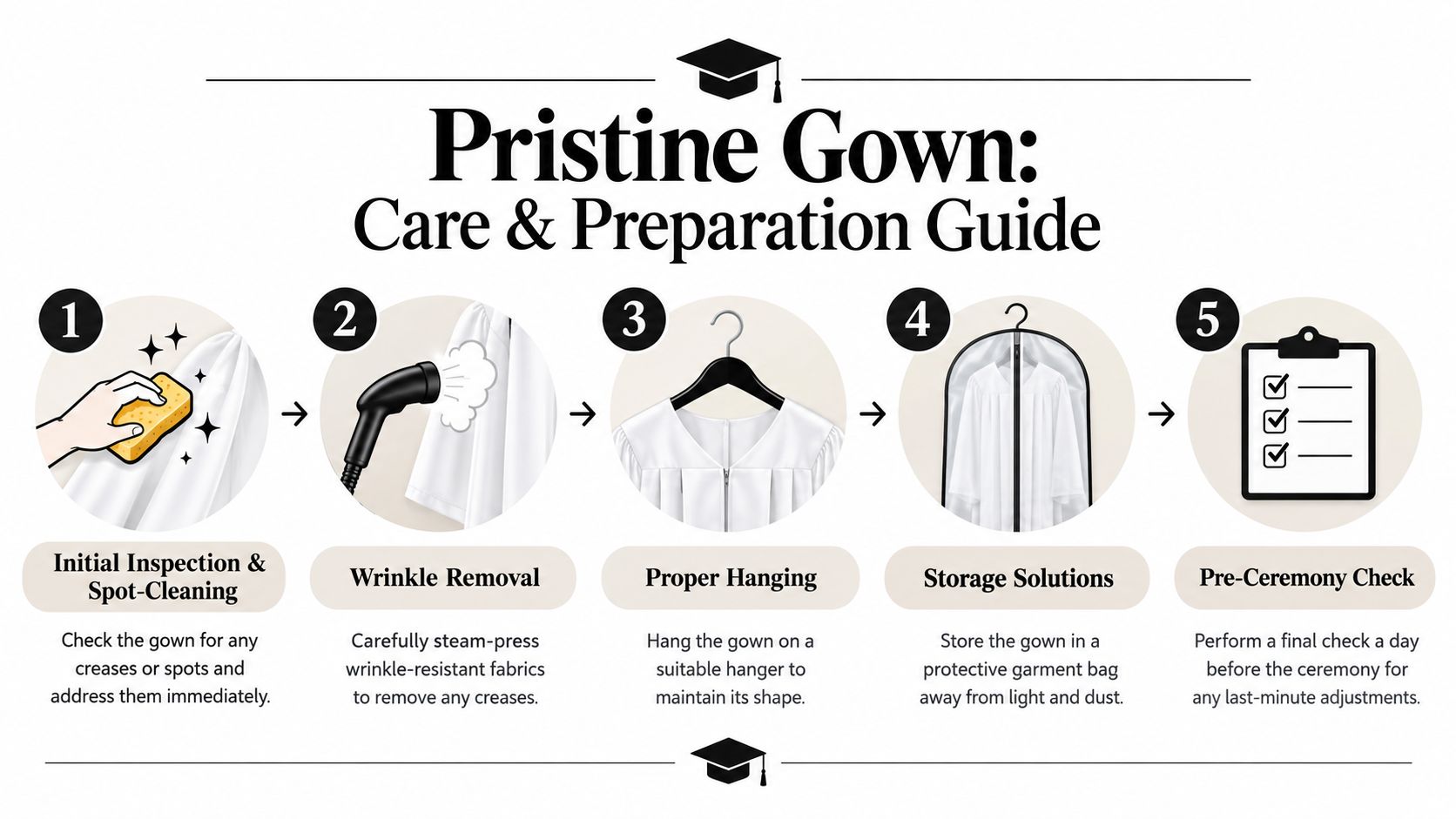
- Inspect and spot-clean carefully. Spread the gown on a clean surface and check the front, sleeves, hem, seams, zipper, and closures. Follow the care label before applying any cleaner, and test a hidden area first.
- Remove wrinkles with the correct method. A garment steamer can relax creases in suitable wrinkle-resistant fabrics. Keep heat and moisture away from decorations or delicate sections unless the care instructions allow it.
- Hang it on a broad hanger. A wide-shouldered hanger helps preserve the shoulder shape and prevents sharp hanger marks. Keep the sleeves naturally positioned rather than crumpled across the hanger.
- Use a breathable garment bag. Store the gown away from direct light, dust, pets, food, and damp areas. Avoid compressing it beneath heavy items, since deep folds can be difficult to remove.
- Perform a final check the day before. Try the gown with the cap, tassel, stole, cords, hood, and shoes. Walk, sit, climb stairs, and confirm that every accessory is present.
A professional laundry service can be useful for approved washable components or related ceremony clothing, but always follow the garment label first. If you're arranging reliable wash and fold laundry, explain that the item is ceremonial and confirm handling requirements before sending it.
Plan the order around checkpoints
A practical order schedule has several checkpoints rather than one last-minute deadline:
- Policy checkpoint: Confirm the school's color, length, degree, hood, and accessory rules before purchase.
- Measurement checkpoint: Take measurements and compare them with the exact product chart.
- Approval checkpoint: Submit logos, stole designs, or specialty colors for institutional approval.
- Delivery checkpoint: Allow enough time to inspect the package and request an exchange if needed.
- Rehearsal checkpoint: Test the complete outfit before the ceremony, including stairs and outdoor movement.
Shipping options vary by seller and destination, so check the current delivery estimates at checkout instead of relying on a general assumption. Bulk buyers should use one central delivery address when possible, label individual packages clearly, and maintain a distribution list that records each graduate's size and required accessories.
When the order arrives, don't leave the package sealed until commencement week. Open it, compare every item with the order confirmation, inspect the white fabric under strong light, and photograph any problem immediately for customer support.
Inspection advice: The best time to discover a missing tassel, incorrect shade, or poor fit is immediately after delivery, not while graduates are lining up.
Conclusion
Choosing white graduation gowns becomes much easier when you separate four decisions. First, confirm whether white is a tradition, a recommendation, or a formal institutional requirement. Second, evaluate opacity, fabric weight, breathability, construction, length, and fit rather than judging the garment from a product photograph alone.
Third, coordinate the complete regalia set. Caps, tassels, stoles, cords, hoods, tams, and medals should follow school guidance and remain visually balanced. Customization can express identity and achievement, but approval should come before production, especially for group orders and embroidered designs.
Finally, build time into the process. Measure early, verify the shade and silhouette, inspect the shipment when it arrives, steam or hang the gown correctly, and rehearse in the full outfit. A white gown should look composed because the preparation was composed.
For individual graduates, the simplest dependable choice is usually an opaque, low-sheen gown with comfortable shoulder room and a hem that supports safe movement. For schools and coordinators, consistent specifications, approved samples, clear sizing records, and labeled distribution reduce avoidable problems.
Graduation Attire offers white high school and college cap-and-gown options, academic hoods, caps, tassels, stoles, cords, garment bags, and related regalia for ceremonies at multiple education levels. Visit Graduation Attire to compare white graduation gowns and coordinate the accessories your institution requires.