

Before you can figure out how to wear an academic hood the right way, you have to know what you’re actually looking at. An academic hood is a storyteller. Its velvet trim calls out your field of study, the satin lining flashes your university’s colors, and its length is a dead giveaway for your degree level. Nailing down these details is the first step to wearing your regalia with the confidence it deserves.
Decoding Your Academic Hood Before You Wear It
Your academic hood is so much more than a fancy accessory; it’s a piece of history loaded with symbolism. Every single element—from the fabric and colors to its specific dimensions—is part of a code that spells out your academic journey. Honestly, it's the most meaningful part of your graduation attire, a garment that tells the world where you studied, what you studied, and the degree you worked so hard to earn.
This isn't some new trend, either. The design and meaning behind academic regalia are rooted in standards that have been respected for over a century. Getting a handle on these details means you’ll not only wear your hood correctly but also truly appreciate the honor it represents.
The Language of Colors and Fabrics
The two features you'll notice first are the velvet trim and the satin lining. Each one plays a distinct role in telling your academic story.
- Velvet Trim: The color of the velvet border on the outside of your hood is your academic ID badge. It identifies your specific discipline or field of study. For example, light blue signifies Education, golden yellow represents Science, and dark blue is for Philosophy.
- Satin Lining: The colors on the inside of the hood are your university’s official colors. They’re often displayed in a pattern, like a chevron or a simple split, to proudly represent your alma mater.
This color-coded system is incredibly practical. At a huge commencement ceremony, an observer can identify a graduate's degree and institution at a glance. You can explore our collections of high-quality Master's Hoods and Doctoral Hoods to see these vibrant color combinations up close.
How Length Signifies Achievement
Not all hoods are created equal, and the biggest difference between degree levels is their length. These measurements aren't just random; they follow a standardized system to visually represent the hierarchy of academic achievement. The higher the degree, the longer the hood, giving everyone a clear visual cue of your accomplishments.
Here’s a quick reference guide to help you see the differences at a glance.
Academic Hood Specifications By Degree Level
| Degree Level | Standard Length | Velvet Trim Width | Key Feature |
|---|---|---|---|
| Bachelor's | 3 feet (36 inches) | 2 inches | The shortest hood, often less ornate and not always worn at commencement. |
| Master's | 3.5 feet (42 inches) | 3 inches | The mid-length option, showcasing a wider velvet trim than the bachelor's version. |
| Doctoral | 4 feet (48 inches) | 5 inches | The longest and most distinguished hood, featuring the widest velvet trim and a fuller shape. |
These precise lengths have been standardized since the Intercollegiate Code of Academic Costume was adopted, ensuring that regalia is consistent and easy to read. For anyone curious about the nitty-gritty of these rules, you can find a ton of detail in resources covering academic dress standards in the United States.
The academic hood is a testament to your dedication. Its length, colors, and fabrics are a codified language celebrating your specific field of study and the institution that guided you. Wearing it is an acknowledgment of your hard-earned place in a long line of academic tradition.
Understanding these details is the foundation for wearing your entire academic regalia with the respect it deserves. To get the full picture of how all the pieces come together, you might want to check out our guide on what is academic regalia. Now that you can decode the meaning behind your hood, you're ready to learn how to wear it perfectly.
The Art of Draping and Securing Your Hood
Perfecting how to wear an academic hood is a rite of passage, a blend of tradition and simple technique. The goal isn't just to throw it on; it’s to make sure it drapes elegantly, feels comfortable, and stays put through the entire ceremony. Let’s walk through the moves to get that polished look without any last-minute fumbling.
First, you'll want to drape the hood correctly. Hold it out in front of you with the velvet trim facing up. The satin lining—the side with your university’s colors—should be facing down, against your chest. Now, lift it over your head and let it settle around your neck and shoulders, with the bulk of the hood hanging down your back.
The key here is to get the velvet trim to lie flat and smooth. It should form a clean V-shape at the front of your neck. Take a second to smooth it out and resist the urge to let it bunch up. A flat, even drape is the foundation for everything else.
Revealing Your University Colors
With the hood sitting on your shoulders, it's time for the most important part: turning out the satin lining to show off your university's colors. This is the move that takes it from a black drape to a vibrant piece of regalia.
To do this, just reach behind you and find the seam where the velvet trim meets the satin lining. Grab the edge of the satin and gently fold it outward, flipping it over the velvet. You’ll immediately see your school's colors start to appear.
Keep working your way down the back of the hood until the full width of the satin is exposed. You’re aiming for a bright, symmetrical display of color against the black shell of the hood. This is the classic "turning out" technique that makes the hood look so impressive.
To get a better sense of the parts you're working with, this simple diagram breaks down the main components of your academic hood.
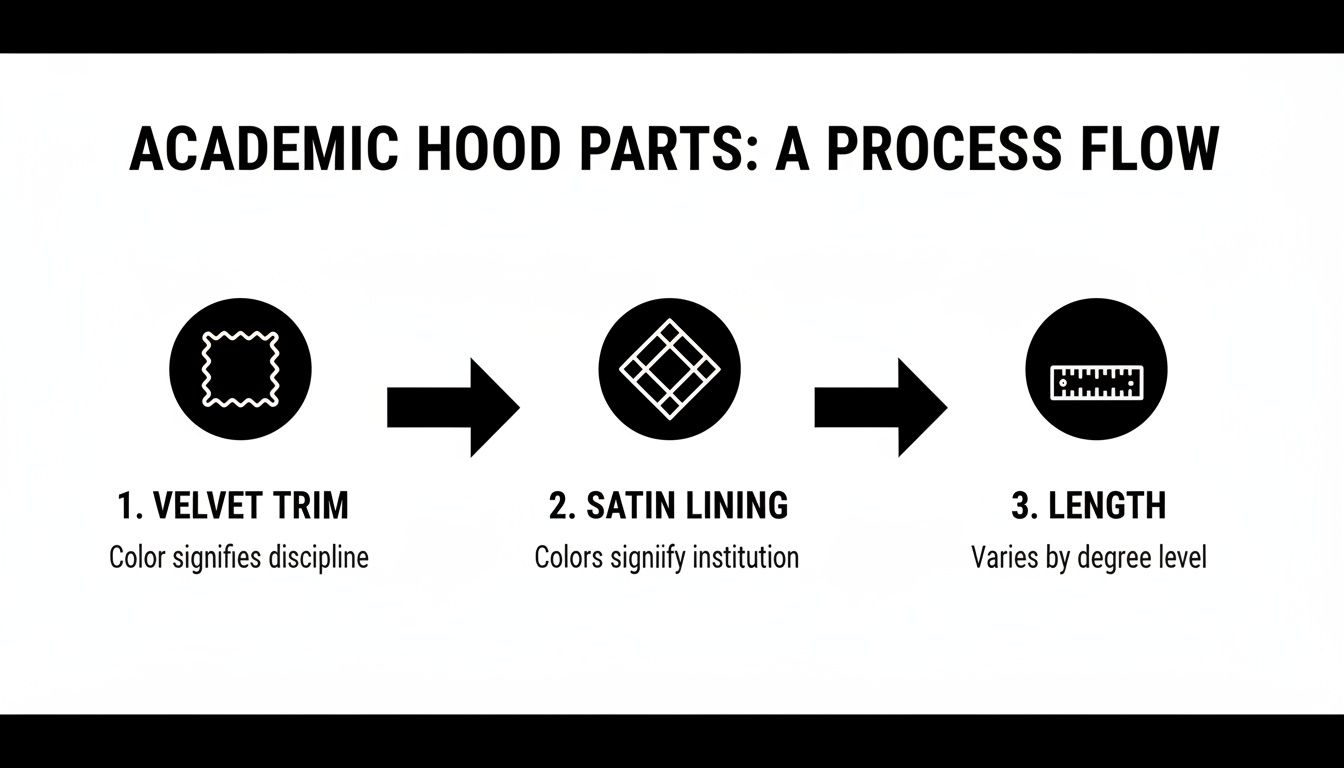
This breaks down the three elements you need to get right—the velvet trim, the satin lining, and the hood's length—for a perfect drape every time.
Securing the Hood for a Comfortable Fit
An unsecured hood is a recipe for a miserable graduation day. Every time you move, it can slip backward and pull tightly against your neck. Not only does it look messy, but it can feel like you're being slowly choked during a long ceremony. Thankfully, every academic hood has a small cord or loop at the front point of the "V" designed to prevent this exact problem.
This little cord is your best friend. Here’s how to use it:
- Shirt Button: If you're wearing a button-down shirt, this is the easiest and most secure method. Just loop the cord around your top button before you zip up your gown.
- Gown Zipper: No button? No problem. You can fasten the cord directly to the zipper pull of your gown.
- Safety Pin: A small safety pin is the ultimate backup plan. You can pin the cord to the inside of your gown or directly to your shirt for a secure fit.
Getting this right is absolutely essential. In fact, 95% of common errors come from draping it wrong or failing to secure it. Taking a moment to fasten the hood properly will keep it from shifting during the typical 2-3 hour ceremonies at major universities. These simple moves ensure your regalia looks impeccable from the moment you walk in to the moment you toss your cap. You can learn more about the finer points of wearing regalia from guides used by major institutions like NYU.
Pro Tip: Don't pull the hood too tight at the front. The goal is to anchor it, not to cinch it like a tie. It should rest comfortably on your shoulders, with the cord taking the weight off your neck so the velvet "V" isn’t pressing against your throat.
Our Academic Gowns are designed to be the perfect foundation for your hood, with sturdy zippers and solid construction that make securing your regalia a breeze. A quality gown really does make all the difference in achieving that comfortable, distinguished look on your big day.
As you climb the academic ladder, your regalia gets more distinguished. While the basic technique for putting on a hood stays the same, it's the subtle styling differences between master's and doctoral hoods that really make you look the part. These advanced degrees come with hoods that are not just longer but are designed to make a real statement.
This is especially true for doctoral hoods, which are noticeably longer and have much wider velvet panels. The idea isn't just to wear it; it's to style it so it creates an elegant, cape-like drape across your back and shoulders. Think of it as the finishing touch that signals you’ve reached the pinnacle of academic achievement.

Achieving Symmetry with a Master's Hood
With a master's hood, the goal is all about symmetry. At 3.5 feet long, it gives you plenty of fabric to show off your university’s colors, which are usually displayed in a chevron pattern on the satin lining. After you've flipped out the lining, take a second to adjust it. You want the point of the chevron to run perfectly down the center of your back.
A classic mistake is having one side of the lining folded over more than the other, which just looks lopsided. To fix it, use your thumbs to smooth the satin from the center seam outward, making sure an equal amount of color is visible on both sides. A perfectly adjusted master's hood creates a crisp, balanced V-shape of color. To learn more about what those colors signify, you can check out our guide on master's degree hood colors and their meanings.
Perfecting the Doctoral Hood Drape
Doctoral hoods are the most impressive piece of regalia, measuring a full four feet and featuring wide, five-inch velvet panels. That extra length and width are meant to create a full, flowing look. The secret to styling it right is to embrace this fullness instead of trying to flatten it out.
Once the hood is secure and the lining is turned out, you’ll want to arrange the velvet panels so they sit broadly on your shoulders. This creates a much more commanding presence, which is a big deal during a hooding ceremony where a faculty member will place it over your head. Let the hood drape naturally to showcase both the rich velvet of your discipline and the vibrant satin of your university.
Wearing your doctoral hood correctly is a visual statement. It’s not just about length; it's about the presence it commands. The wide panels are meant to be displayed proudly, reflecting the depth and significance of your terminal degree.
Common Styling Mistakes And How To Fix Them
Even when you try your best, little mistakes can throw off your whole look. Knowing what to look for will help you make quick adjustments before you walk across the stage.
We've all seen these common issues, but they are incredibly easy to fix. Here's a quick troubleshooting guide for the most frequent styling errors we see.
| Common Mistake | How It Looks | Quick Fix |
|---|---|---|
| Hidden University Colors | The hood is lying flat against your back, showing only the black shell fabric. | Reach behind you, find the bottom edge of the hood, and gently flip the satin lining outward to reveal the colors. Adjust for symmetry. |
| The "Choking" Feeling | The front of the hood is pulling tightly against your throat, causing discomfort. | Make sure the front loop is securely fastened to a shirt button or the gown's zipper pull to properly distribute the weight. |
| Lopsided Drape | The chevron pattern or school colors look off-center or uneven on your back. | Ask a friend to help you adjust the back of the hood. Have them smooth the satin lining from the center seam outwards until it’s balanced. |
| Twisted Velvet Trim | The velvet trim at the front "V" is rolled or twisted instead of lying flat against your gown. | Before securing the front loop, take a moment to smooth the velvet so it lays flat and creates a clean, uninterrupted line. |
Getting these styling details right isn't just about following rules; it's about honoring your achievement. By taking a few extra moments to adjust your master's or doctoral hood, you ensure that your hard-earned regalia looks as polished and proud as it deserves to be.
Coordinating Your Hood with Other Regalia
Your academic hood is the star of the show, but it doesn't perform alone. Nailing that polished, dignified look on graduation day is all about making sure your entire ensemble—gown, cords, stoles, and all—works together as a single, harmonious outfit. It’s a sign of respect for your achievement and the traditions you're now a part of.
This isn't just about throwing on each piece. It's about thoughtful layering and placement. From how the hood sits on your gown to the way your honor cords are draped, every little detail matters. A well-put-together look shows you care.
Layering Cords and Stoles Effectively
Chances are, you'll be wearing more than just a gown and hood. Honor cords, stoles of gratitude, and sashes from student organizations are all common additions. The trick is to layer these accessories so they complement your hood, not bury it.
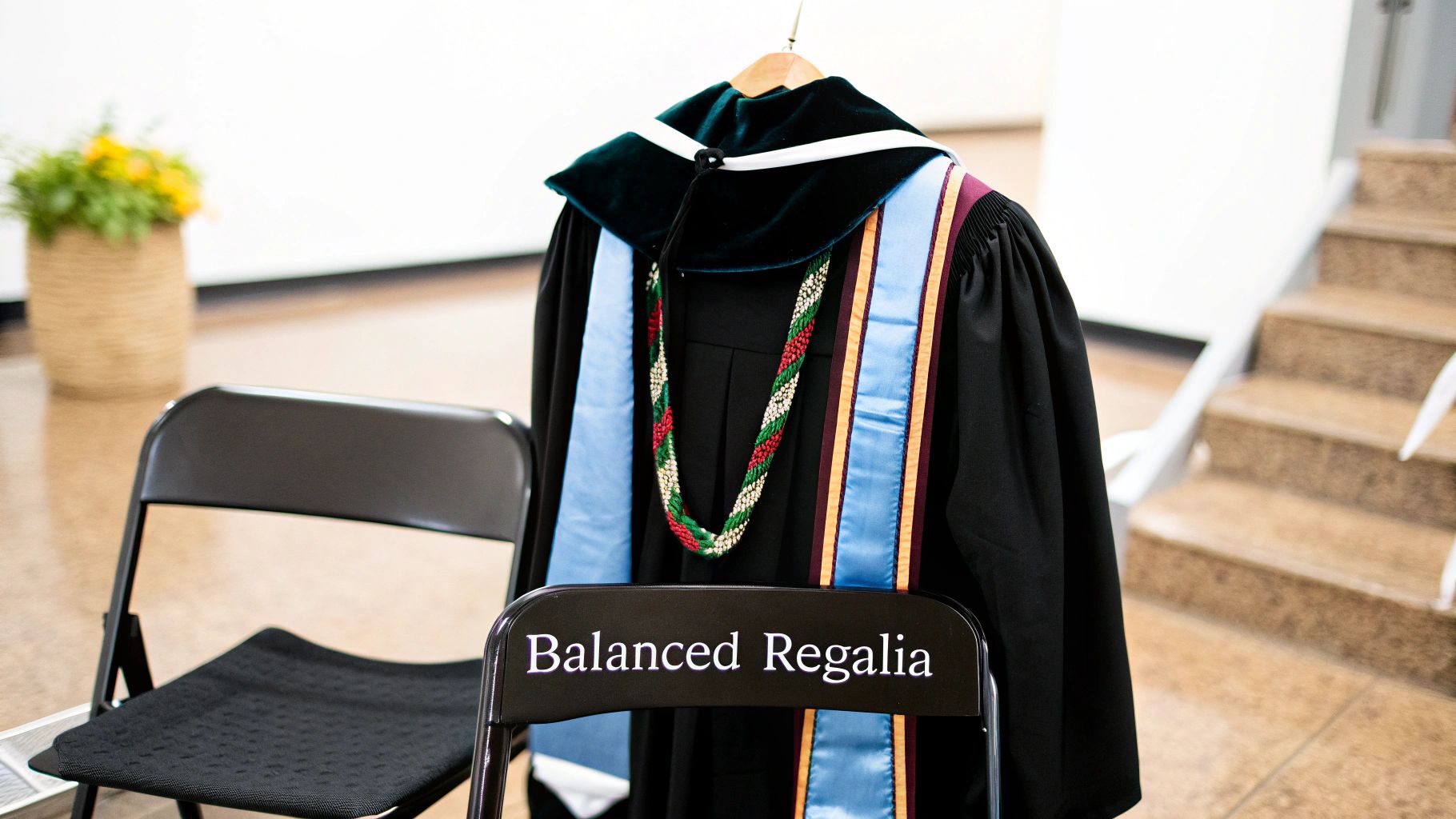
Your hood should always be the base layer, sitting directly over your gown. Any Honor Cords or Custom Stoles are meant to be draped right on top. This is critical because it keeps the hood’s velvet trim and satin lining—the parts that signify your degree and university—in full view.
Think of it this way: your gown is the foundation, your hood is the main event, and everything else is a finishing touch. If you have multiple cords, keep them neat and untangled, letting them fall naturally on either side of your hood’s V-neck. This simple method maintains the visual hierarchy of your regalia. For a deeper dive into all the different pieces of graduation wear, check out our guide on the complete graduation cap and gown ensemble.
Positioning the Hood Over the Gown
How your hood and gown work together is crucial for both comfort and appearance. The front "V" of the hood should sit neatly over the gown’s collar or neckline. You want the velvet trim to frame the collar perfectly, not bunch up or get lost underneath it.
One of the most common mistakes is letting the hood slip back, which causes the gown’s zipper to peek out awkwardly above the velvet. A properly secured hood sits comfortably below your chin, with its weight distributed across your shoulders instead of pulling at your neck.
To nail this, make sure the hood’s front loop is securely fastened to a shirt button or the gown's zipper pull before you start arranging anything else. It's a small step that makes a world of difference in keeping you looking sharp all day long.
Creating a Balanced Look with Tassels and Headwear
Even your tassel color plays a part in the big picture. While many schools use a standard color for all graduates, some align it with the student’s field of study. If your tassel matches your hood's velvet—for example, a light blue tassel for an Education degree—it creates a really cohesive, intentional look.
When you put on your cap or tam, make sure it sits level on your head. The tassel should hang on the right side before your degree is conferred, then get moved to the left side afterward.
Just follow this simple order of operations for a flawless look:
- Gown First: Start with your academic gown, ensuring it's zipped up and sitting right on your shoulders.
- Hood Next: Place the hood over your head, secure the front loop, and turn out the colorful satin lining.
- Stoles and Cords: Drape any stoles or cords over the hood, arranging them neatly.
- Cap Last: Finally, put on your cap or tam with the tassel on the right.
By making sure each piece of your regalia is in its proper place, you create a look that is not only correct but also a proud and polished representation of your entire academic journey.
Keeping Your Hood Pristine Before and After the Ceremony
You’ve poured years of dedication into reaching this moment, so making sure your academic regalia looks its absolute best is the final, rewarding touch. Your hood, with its delicate velvet and rich satin, requires just a little bit of care to look sharp on the big day and remain a treasured keepsake for years to come.
Getting your regalia ready starts the moment you unbox it. Most hoods arrive neatly folded, which means you'll almost certainly have a few creases from shipping. The goal is to smooth them out without causing any damage to the different fabrics.
Pre-Ceremony Preparation
To get your hood looking crisp and photo-ready, your best friend is a simple garment steamer. Steam is much kinder than a direct iron, which can easily scorch the velvet or even melt the satin lining.
- Steaming the Satin: Hold the steamer several inches away from the satin lining and move it in a slow, continuous motion. You should see the wrinkles release almost instantly.
- Handling the Velvet: Be extra cautious with the velvet trim. Use steam sparingly and from a greater distance to avoid crushing the pile. Whatever you do, never press an iron directly onto velvet.
Once you’re done steaming, immediately hang your hood on a proper hanger. This lets it cool down and allows any minor remaining wrinkles to fall out naturally. If you're traveling for your ceremony, careful handling is key; check out these professional tips for packing ceremonial attire without wrinkles.
Post-Ceremony Care and Storage
After the celebration is over, your hood transforms from ceremonial wear into a lasting memento of your achievement. The right care is essential to preserve its quality and meaning for the long haul. First rule: avoid the washing machine at all costs. Spot cleaning is the safest way to go.
Use a damp cloth with a tiny amount of mild detergent to gently dab any small stains. For anything more serious, it’s best to consult a professional dry cleaner who has experience with delicate fabrics like velvet and satin.
For long-term storage, the main goal is to protect it from dust, sunlight, and pests. A breathable Garment Bag is an excellent investment, as it prevents moisture buildup that can lead to mildew while keeping the fabric safe.
Store the bag in a cool, dark, and dry place, like the back of a closet. This simple step will keep the vibrant satin colors from fading due to light exposure. Many graduates also choose to display their hood alongside their diploma in a shadow box or a specialized Diploma Frame, turning their regalia into a permanent tribute to their hard work.
A little care truly goes a long way in preserving this powerful symbol of your academic journey. For some, like bachelor's graduates, the hood itself represents a significant evolution in academic tradition. Many wonder if they even wear one. The answer is a definitive yes, thanks to a 1959 update to the academic code that permitted 3-foot hoods for bachelor's degrees, shifting a tradition once exclusive to master's and doctoral graduates. This change is now standard for the 70% of U.S. graduates who earn a bachelor's degree each year. Discover more insights about the history and standards of academic hoods.
Answering Your Top Questions About Academic Hoods
Navigating the final details of graduation can feel like a mad dash, but figuring out your academic hood shouldn't add to the chaos. Over the years, we've heard just about every question there is about this unique piece of regalia. This section is your go-to guide for quick, clear answers to those last-minute queries, helping you wear your hood with total confidence.
Think of this as your personal cheat sheet for commencement day. From photos to fit, we’ll cover the practical questions that always seem to pop up when you're already in your gown. Our goal is to make sure you feel comfortable and look polished as you celebrate this monumental achievement.
Can I Wear My Academic Hood for Graduation Photos?
Absolutely, and you definitely should! Your academic hood is a powerful symbol of your hard work and a non-negotiable part of your official graduation look. For portraits, the key is to make sure it’s draped correctly, with the velvet trim lying flat against your shoulders and the satin lining turned out to display your university colors proudly on your back.
A great tip from seasoned photographers is to plan for photos both before and after the ceremony.
- Before the Ceremony: If your institution has a separate hooding moment during the event, you can take some great shots carrying the hood neatly folded over your arm. It really captures the anticipation of the moment.
- After the Ceremony: Once you've been officially hooded, it's prime time for portraits in your full regalia. This is when you'll get those iconic photos you’ll be framing for years to come.
What Do the Different Colors on My Hood Mean?
The colors on your academic hood aren't random; they follow a specific academic code, and each one tells a part of your story. It’s a visual language that communicates your accomplishments to everyone in the audience without you having to say a word.
There are two key color components:
- The Velvet Trim: This color represents your specific field of study. For instance, White is for Arts and Humanities, Golden Yellow signifies the Sciences, and Light Blue is for Education.
- The Satin Lining: These are the official colors of your university. They're usually arranged in a distinctive pattern, like a chevron or a split lining, to proudly represent your alma mater.
You can almost always find the exact color combination for your degree on your university's commencement website. Our full selection of Master's Hoods and Doctoral Hoods showcases these vibrant, meaningful color combinations in action.
How Do I Keep My Hood From Choking Me?
This is easily the most common concern we hear, and thankfully, it has a simple fix. That uncomfortable pulling sensation happens when the weight of the hood isn't properly supported and hangs directly from your neck.
Your hood is designed with a small cord or loop at the front "V" point for this exact reason. Its job is to anchor the hood to your clothing, taking all the weight off your neck and placing it on your shoulders where it belongs.
To use it, just fasten the cord around a shirt button or attach it to the zipper pull of your gown. If you don't have a button and the zipper doesn't feel secure, a small safety pin attached from the inside of your gown to the hood fabric works like a charm. This tiny adjustment makes a world of difference in your comfort throughout the day.
Should I Put the Hood On Before or After the Cap?
There's definitely a standard order for putting on your regalia that ensures everything sits correctly. Following this sequence prevents any awkward bunching or tangled accessories, so you look polished and put-together.
Here’s the proper order:
- Gown First: Your gown is the foundation of the whole look.
- Hood Second: Drape and secure your academic hood over the gown.
- Cords and Stoles Third: Any additional items like Custom Stoles or honor cords go on top of the hood.
- Cap Last: Your cap or tam is the final piece to complete the uniform.
Of course, if you're being hooded on stage as part of the ceremony, you'll carry your hood with you to the stage, and a faculty member will place it over your head for you.
At Graduation Attire, we believe every graduate deserves to feel proud and look their best on commencement day. We offer a complete range of high-quality regalia, from gowns and hoods to custom stoles and accessories, ensuring you have everything you need to celebrate your story. Explore our full collection and find your perfect fit at https://www.graduationattire.com.